Want to see Raider King content first? Add us as a preferred source.
Fate/Grand Order has, on the surface, an incredibly simple combat system where the player must simply select three cards and occasionally use some skills. By just using whatever skills are currently charged and attacking enemies with your Buster cards, it’s very easy to make it through a large amount of the game’s story without much effort.
However, players will inevitably hit a brick wall playing this way. Either from encountering a battle in the Lostbelts where they can barely damage an enemy, or by attempting to play a currently running event where they’ll suddenly be hit with an 800,000 HP Berserker who eats your 10,000 damage attacks like they’re nothing.
In desperation, you may go online to see how other people handle these battles, only to see no one else having trouble as they deal over 100,000 damage with their attacks or even use their Noble Phantasm multiple times in a row. Seeing how everyone online appears to be doing this, a single question will arise.
“Why didn’t the game teach me how to play?”
Fate/Grand Order’s tutorial teaches the player almost nothing about how the game’s battle system actually works. It’ll tell you what each color of attack card does, how to click on skills, and what a Noble Phantasm is. Other than that, the player is essentially thrown into the story and expected to learn how the battle system works on their own.
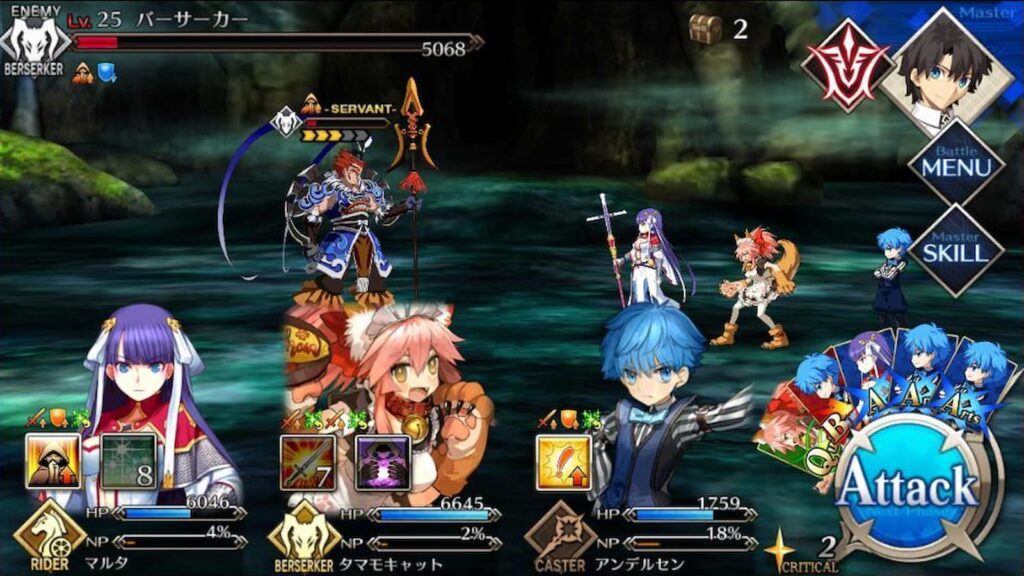
But why is it like this? Why doesn’t Fate/Grand Order’s tutorial, for as long as it is, actually tell players how to play the game? That answer is both simple and complicated. As the Fate/Grand Order that you can play in the current year isn’t the same game as the Fate/Grand Order that was first released in 2015.
The battle system that the game had in 2015 might have the same framework as the one it currently has, but 10 years of changes, both big and small, have completely changed how most aspects of it work. While going over all of these changes may be impossible, I would like to highlight a few of them.
One very early quirk of Fate/Grand Order’s battle system was not being able to select which enemy your servants would attack, forcing you to attack the front row enemy in any encounter. This was changed almost immediately after the game was released, presumably due to how limiting it was, with the only story chapter whose encounters were built around this being Orleans.
Even with the knowledge that you had to attack the first enemy in a formation, it was entirely possible to accidentally screw yourself over in early Fate/Grand Order, as once you clicked on the attack button, you couldn’t leave the attack select screen. Meaning that if you forgot to use a vital skill, you were forced to wait until the next turn to use it. It took several months for this to be changed.
These first two major changes were only the beginning of over a decade of changes. Being able to set 7 support servants, the ability to use Fous on servants who were already at max lvl, the double speed function, the UI displaying what enemy classes will be in your next battle, one can list the amount of changes this game has received for days and still have more to talk about.
Fate/Grand Order players back in 2015 could only imagine our current gameplay system and all of the gameplay improvements it has had in the past decade, and the changes to the game go far beyond just the gameplay. Visually, the game has completely transformed as well. Alongside the various gameplay and UI updates the game received over the year, the game will also occasionally revamp a character’s sprites.
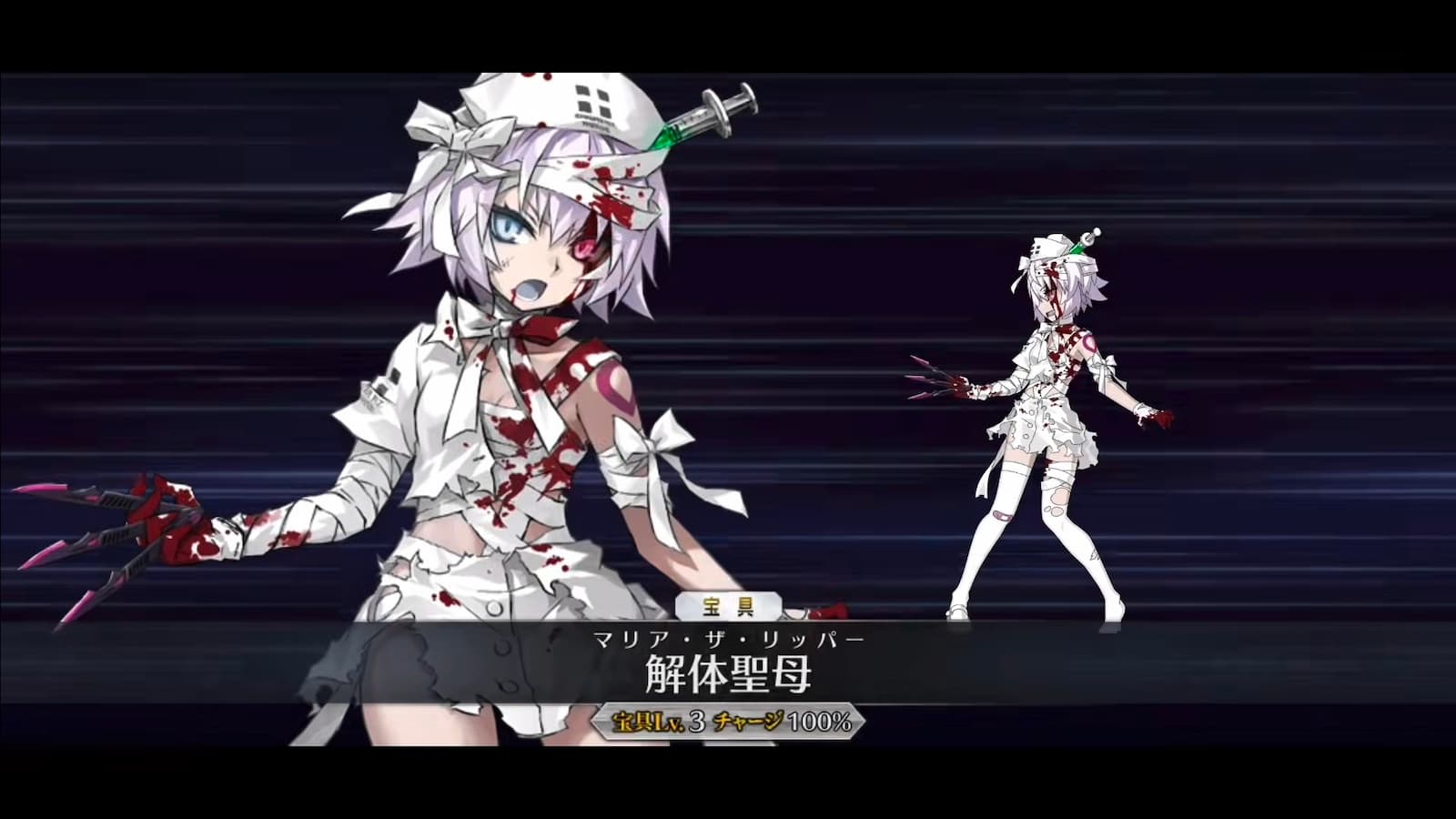
Over the past decade, a majority of the early game servants have had their animations completely reworked, resulting in a game that looks much better than the frankly ugly early days of the game (although there are still a handful of characters, such as Nursery Rhyme, who need an update).
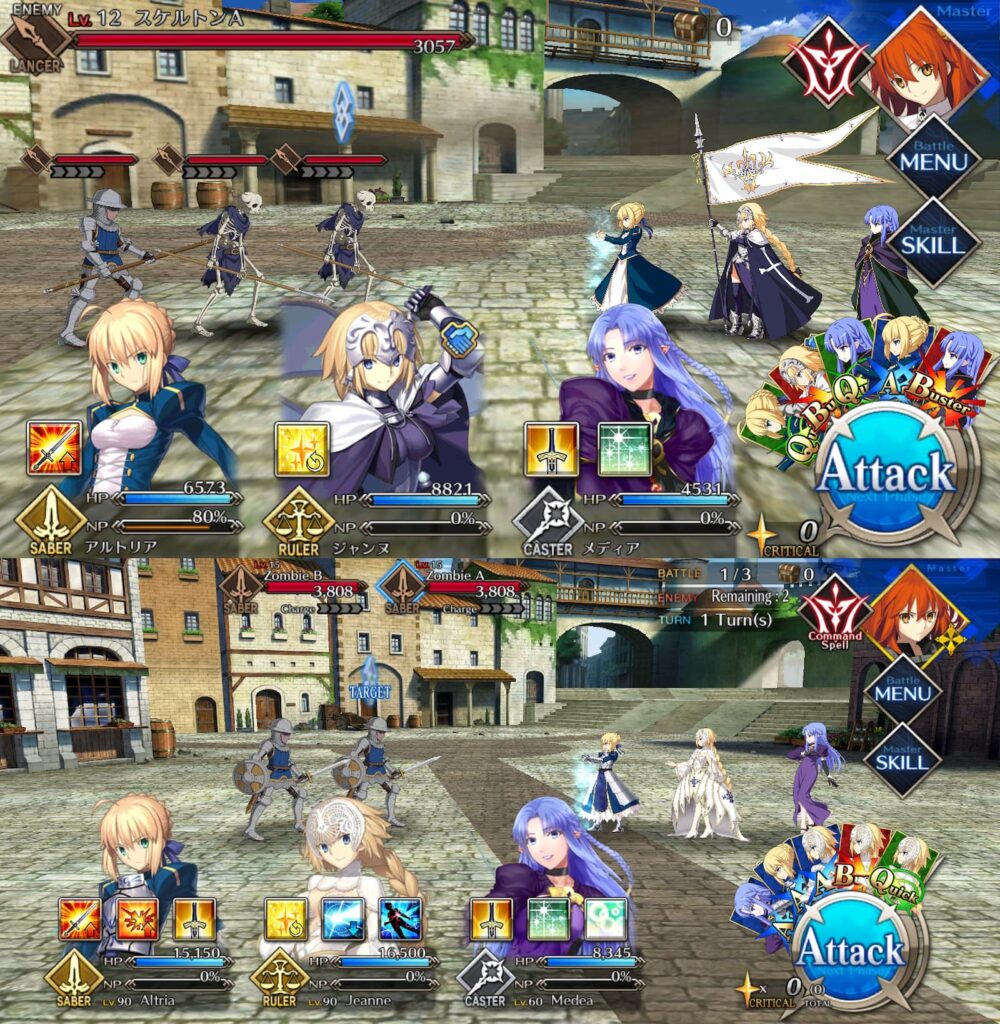
Now, while these changes are certainly large, it wouldn’t be impossible to incorporate explanations of them into the tutorial. In fact, they did add a section to it in order to explain the double battle speed function.
What would be impossible to explain is the current meta of the game and how nearly every new battle in the game is built around damage exploitations that a new player would have no way of learning about without assistance from a friend.
In order to explain the current meta of the game, we must first look back at the entire history of the game’s support characters. As the current state of the game was not an overnight change, it was instead the result of many meta changes over the years.
For the first year, the game didn’t really have a meta on account of the low amount of servants available. For the most part players would either have to use their favorite character, have a party composed solely of servants strong against their current enemy, or raise up Eurayle to fight that infamous Gawain boss battle.
The first major change to the game’s meta and how the gameplay loop worked came from the release of the 5 star Caster servant Merlin in December 2016. Merlin was a support servant who was capable of massively increasing the speed at which servants could raise their noble phantasm gauges.
While the game always had Support servants such as Zhuge Liang (who also had an NP raising niche) and Tamamo-no-Mae, the sheer speed at which Merlin could passively buff allies paves the way to Fate/Grand Order’s first “double servant” meta, where players would use two of the same servant via borrowing one for a friend in order double their effects.
On some level, it seemed that Lasengle (at the time known as Delightworks) must have realized that Merlin changed the game too much as for nearly two years after his release the game didn’t add any major support servants. However, everything changed on the game’s 3rd anniversary in 2018 with the release of Skadi. This single banner would change the game forever.
Skadi’s skill kit allowed her to instantly raise the NP gauge of any servant by 50% and increase the damage of Quick-style attacks by 50%. This gave birth to the double Skadi system, where players would use that increased damage and the free NP to loop Noble Phantasms three times, allowing the player to clear entire battles within seconds.
With this change to the meta, it became commonplace for players to exclusively rely on their AoE Quick-NP servants, with most others getting sidelined. This was the era of Edmond Dantes, Lancelot, and Parvati. While this was a major change to the meta, Quick servants weren’t always reliable due to inconsistent damage and NP gather rates.
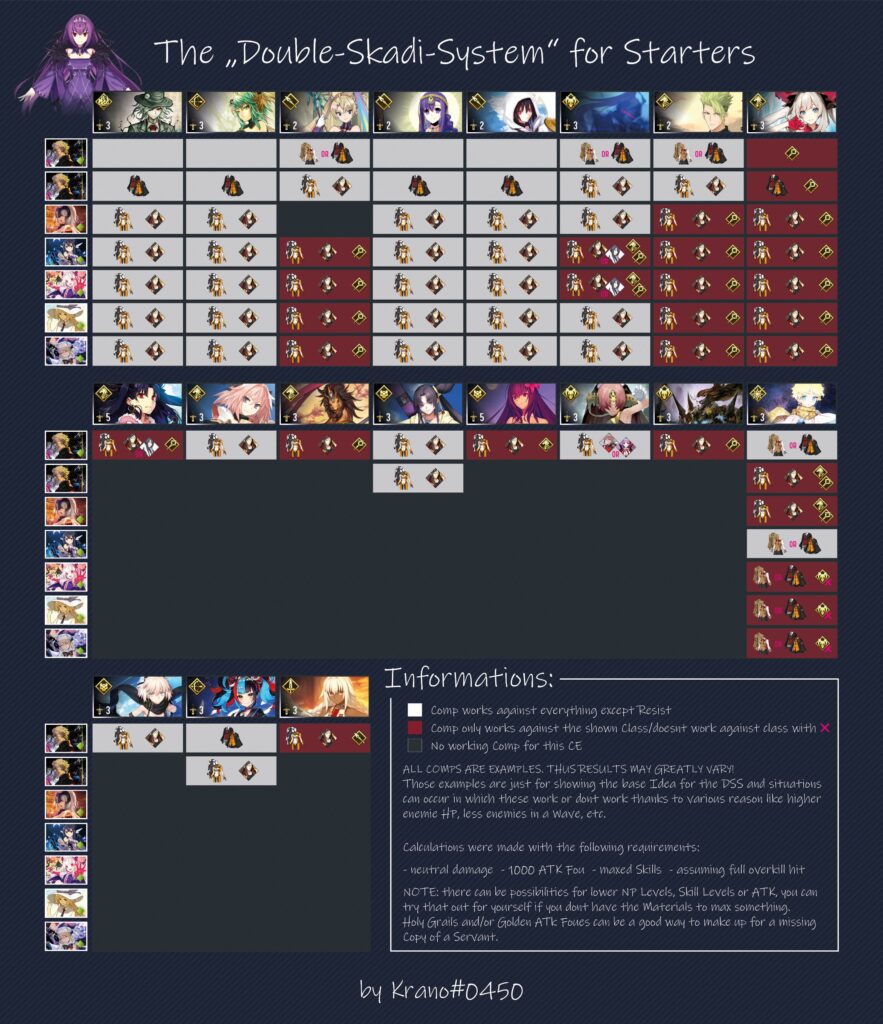
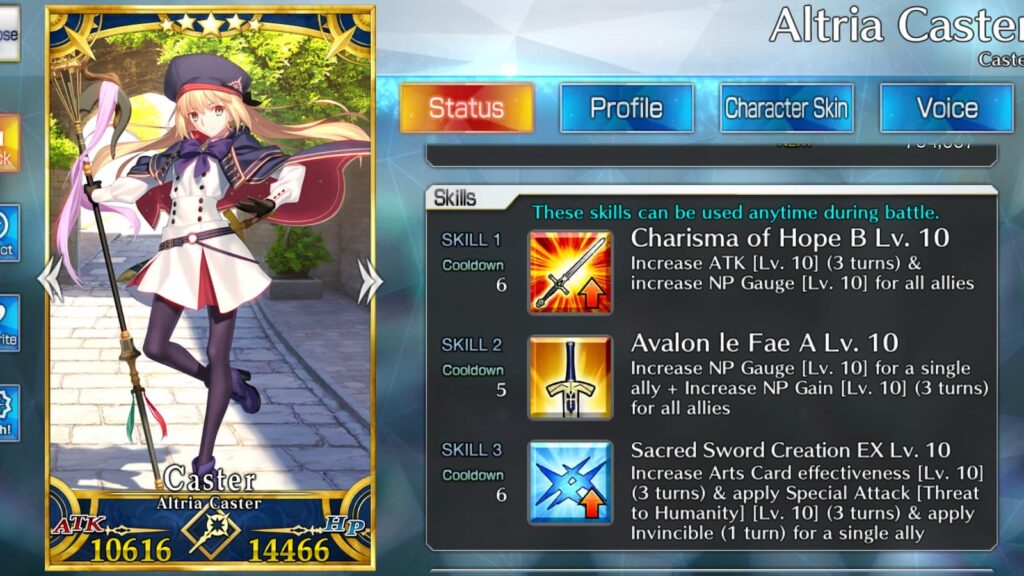
Skadi undeniably changed the game forever, but she was still a niche that couldn’t be applied to every servant. However, presumably because of the success of Skadi, Lasengle would soon play into this new looping meta themselves with the release of the game’s 5th anniversary servant in 2020: Caster Artoria, affectionately called Castoria by the fanbase.
Castoria not only had the ability to raise ally NP gauges by 50%, but she could also raise their base attack by 20%, their Arts attack by 50%, and most vitally their NP generation rate by 30%. All of this, combined with the fact that Arts-type servants by default could raise their NP gauges faster than Quick-type servants, meant that a new meta would be formed.
While only a select few Quick-type servants could loop battles under the double Skadi system, nearly every AoE Arts-type servant in the game could loop battles under the double Castoria meta. The fanbase would quickly latch onto this, and the idea of using any servant other than Castoria or Skadi as a support became nearly nonexistent.
The double Castoria system ruled over the game’s meta and must have been noticeable on the financial side of things, too. Whenever a new Arts-AoE servant was released, players would almost always pull for them in order to have another character who could clear battles in seconds.
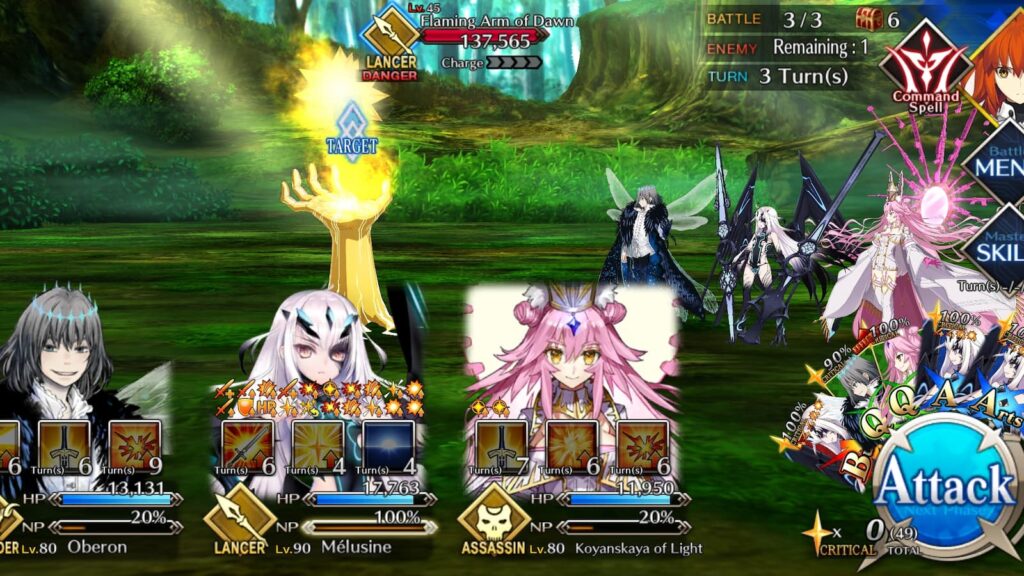
Unlike Skadi, though, Castoria’s reign of the game didn’t last for two uninterrupted years. As the game’s 6th anniversary in 2021 would introduce Koyanska of Light. A very strange support character who had the ability to raise ally NP gauges, increase the strength of Buster-type attacks, and had the ability to make Buster-type attacks actually give NP charge.
While the introduction of Koyanskaya allowed a few select Buster characters to loop their Noble Phantasms, it was hardly a drop in the bucket compared to the number who could loop under the Castoria system. It seemed that Koyanska wouldn’t completely change the meta like previous support servants.
A month after Koyanskaya’s release, Oberon was added to the game. The fairy king had the ability to raise NP gauges and increase Buster damage just like Koyanska. It was discovered instantly that having an Oberon in your party in addition to the Koyanskas allowed nearly every Buster servant in the game to loop.
Yes, in what was either an act of greed or unintended consequences, Lasengle created a new Buster meta which, unlike the previous Quick and Arts metas, requires the player to pull for two different 5-star characters, requiring much more investment from players who don’t want to be left behind.
Those observant among you may have noticed an imbalance in the three card types now. While nearly every Arts and Buster-type servant could loop now, only a select few Quick servants could under the Double Skadi system. It would appear Lasengle themselves noticed this, as in the summer of 2022, they would release yet another major support servant: Summer Skadi.
Unlike every other summer servant in the game, who all play very differently from their normal versions, Summer Skadi is just an upgrade of regular Skadi, increasing the attack and NP gain of Quick servants even more than usual. When combined with the other two Skadis, a Triple Skadi system was formed that allowed nearly all AoE-quick servants to loop their NPs.
At this point, these supports were starting to get difficult to keep track of during battle. The Double Koyanska + Oberon system and the Triple Skadi system especially, were hard to deal with as only three servants could be on your frontline at any given time, meaning most players would be forced to use the plugsuit master skill in order to switch them out, meaning they couldn’t use one of their better master skill sets to increase Buster or Arts attack.
So what if the game added another support servant specifically centered around switching out your front and back row characters? 2023 saw the release of Summer Chloe, a character who could both increase the NP gauge of servants and immediately retreat to the back row, allowing a different support character to take her place.
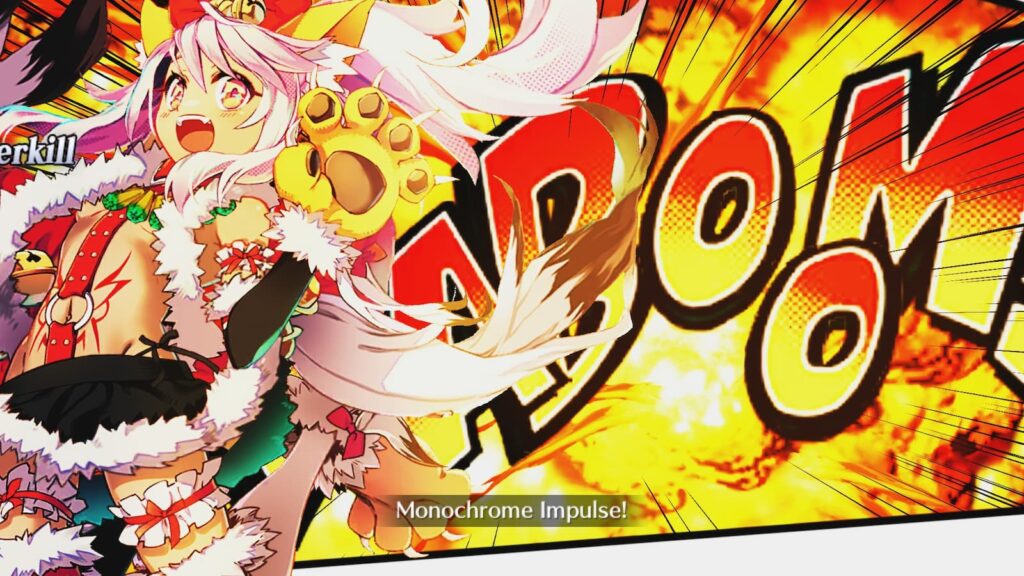
It took several years of slow implementation, but with this final support release, nearly every AoE character in the game could loop. This, of course, had a large effect on how battles were designed, as Lasengle was expecting players to have at least one of these major supports in their collection in order to either loop or do massive damage. It has become extremely common for bosses to have multiple health bars with hundreds of thousands of HP because these supports allow the player to do that much damage.
To this day, Fate/Grand Order’s entire meta is based around the idea of looping your Noble Phantasm and clearing battles instantly. This has not only affected the gameplay, but it has also had a visible effect on the game’s gacha banners.
Servants who don’t have AoE attacks are hardly used these days and have started to become a rarity. If you don’t have an AoE attack, it’s unlikely that people will pull for you. In response to this, Lasengle has simply been releasing fewer single-target servants these days. While a few get released for the sake of having a few boss killers, they are an exception that proves the rule.
To bring everything back to my original point. How could Fate/Grand Order’s tutorial possibly begin to explain the systems around which the game’s battles are currently built around? How could it explain looping if it requires specific characters to accomplish? How could it explain why some characters have self-sufficient kits while others need Skadi to do damage? Where does one even begin to teach people how to actually play this game without giving them an entire booklet to read?
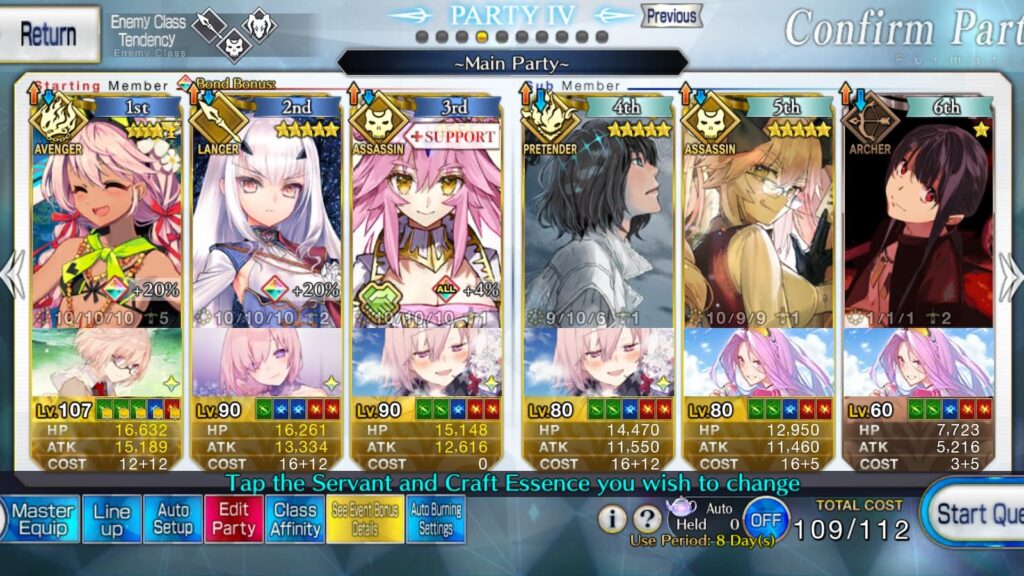
While the tutorial has been updated over the years with some text explaining details like the double battle speed function, actually explaining Fate/Grand Order’s battle system might not be possible without extremely lengthy videos or diagrams at this point. The game has simply changed too much at this point for the simple few-minute tutorial to handle.
I cannot fully excuse Lasengle for this, as a bad tutorial is still a bad tutorial at the end of the day, and the reason the meta has so many support servants these days is almost certainly due to greed in a post-Skadi society, but I feel sympathetic for the position they have been put in. The employees who originally implemented that tutorial in 2015 could not have anticipated how the game would evolve; no one could have.
Fate/Grand Order’s grand finale will be occurring on December 20, 2025, in the Japanese version of the game, with the English version of this chapter having an expected release in December of 2027. Perhaps that two year gap between releases will be enough time for players starting the game now to learn how to play the game before that finale.