Want to see Raider King content first? Add us as a preferred source.
Recently, Nintendo announced a remake of the beloved Nintendo 64 game The Legend of Zelda: Ocarina of Time. The announcement trailer didn’t show much: a snippet of the opening narration, and a highly detailed model of Child Link in a recreation of the game’s opening cutscene, followed by a cut to the title. Seeing the young Hero of Time’s new model made many questions rush through my mind, though. Perhaps the largest one was: “Will we have to play as a boy this time around?”
For nearly forty-five years now, Link, the main character of The Legend of Zelda, has been portrayed solely as a man. Despite him being a self-insert who lacks the ability to speak beyond the player’s own input, he has never been officially portrayed as another gender.
The idea of Link, the hero whom we’re supposed to see ourselves as, being a girl used to be thought of as so ridiculous that Satoru Iwata and Shigeru Miyamoto laughed at it as a joke in a 2006 Iwata Asks interview. Why, though?
The Zelda brand, especially in the West, has always marketed itself primarily towards men in a way that can best be described as a “boys’ club.” Ocarina of Time, the entry currently being remade, infamously had an advertisement that asked, “Whilst thou get the girl, or play like one?”
While this ad would later be changed to omit that line, it’s emblematic of how the franchise (and, quite frankly, gaming as a whole) was treated for years. Zelda was a “boys’ franchise” about saving the girl because, for much of gaming’s history, boys were seen as the primary demographic for gaming.
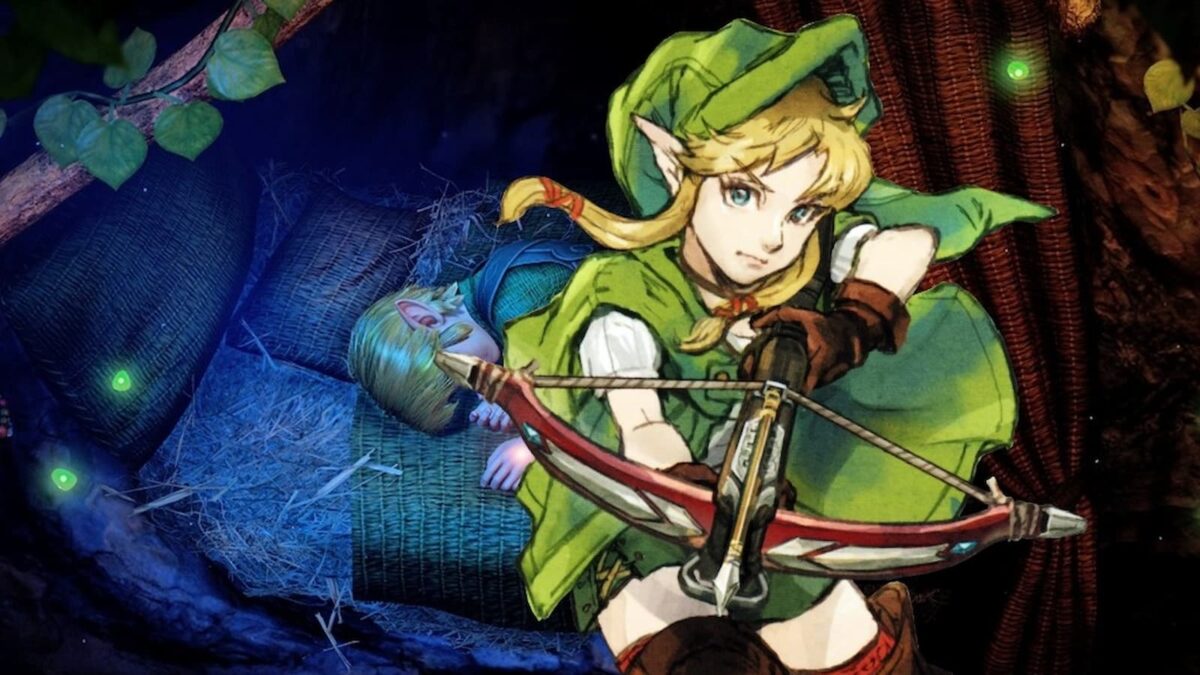
As the gaming industry shifted, and Nintendo itself began to shift Link’s designs in order for “Anyone to relate to him”, a desire to see a female version of Link grew. When Koei Tecmo released the artbook for their Zelda-themed Musou game, Hyrule Warriors, and fans saw that at one point in development, a female version of the hero was considered, it felt like a genuine loss that she didn’t end up in the final product.
Thankfully, this design wouldn’t be left to wither as a piece of obscure apocrypha. When the 3DS version of Hyrule Warriors, titled Hyrule Warriors Legends, was released, Nintendo included this female version of Link in the game as a brand new character named Linkle.
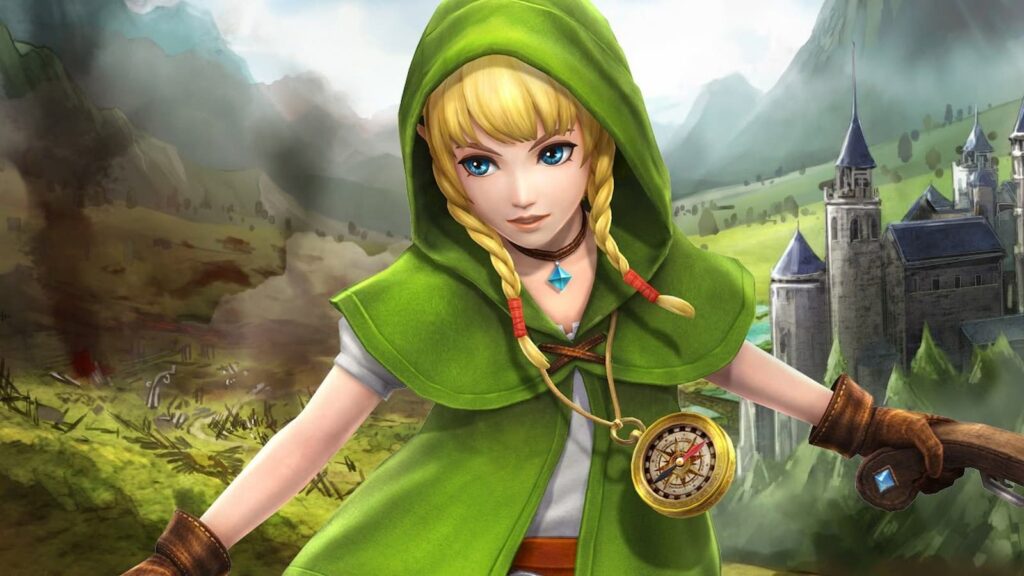
Within the Hyrule Warriors universe, Linkle is not the reincarnated hero like every Link in the franchise. Rather, she is a clueless farm girl who has deluded herself into thinking she’s the next Link. She was a fun addition to the roster that both offered players a look at how a hypothetical female Link would be, and showcased several items that hadn’t been in a Zelda game in years, such as crossbows and the pegasus boots.
And then we never saw Linkle again.
Despite the character’s popularity and a vague statement from Aonuma about how they would keep her in mind for future titles, Linkle has yet to appear in a single video game since 2015, let alone a mainline Zelda game. No mainline or spinoff games in the decade since her debut have even paid lip service to the idea of including a female version of Link.
While Nintendo has completely forgotten about Linkle, though, fans haven’t. If the company wouldn’t allow players to be a girl in The Legend of Zelda, then it was up to modders to make it happen themselves by inserting her into previous games. The very first Linkle mod that I could find is also, by far, the most popular: a mod that inserts her into 2017’s The Legend of Zelda: The Breath of the Wild, complete with light voice acting.
Over the years, this mod has been expanded to create unique armor styles for each piece of clothing in the game to match Linkle and even edited the game’s dialogue to use her correct pronouns.
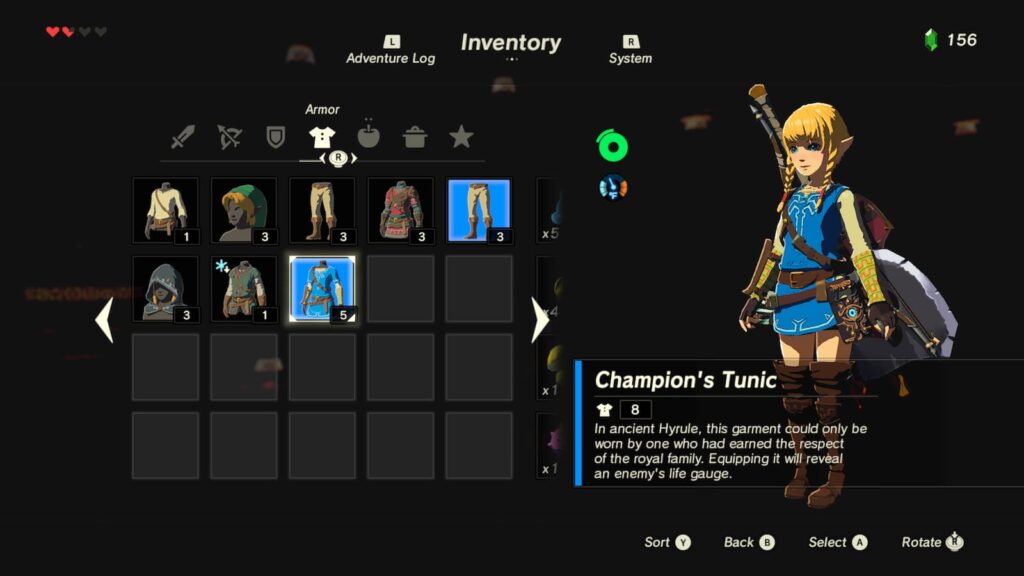
To say that this mod is popular would be an understatement, as it has 400,000 downloads on the popular mod hosting site GameBanana. Nearly half a million people and counting were willing to modify their copies of Breath of the Wild just to play as Linkle.
Breath of the Wild’s Linkle mod was the first and the most popular, but it’s far from the only one. At the time of writing this article, only ten games in the Zelda series, which has roughly twenty mainline games, do not have a Linkle mod. Of those ten games, the only 3D Zelda not to have a Linkle mod is Majora’s Mask.
| Game | Have Modders Added Linkle to it? |
|---|---|
| The Legend of Zelda | No |
| Zelda II: The Adventure of Link | No |
| A Link to the Past | Yes |
| Link’s Awakening | Yes |
| Ocarina of Time | Yes |
| Majora’s Mask | No |
| Oracle of Ages | No |
| Oracle of Seasons | No |
| The Wind Waker | Yes |
| Four Swords | No |
| The Minish Cap | No |
| Four Swords Adventures | No |
| Twilight Princess | Yes |
| Phantom Hourglass | Yes |
| Spirit Tracks | No (But there is a WIP) |
| Skyward Sword | Yes |
| A Link Between Worlds | Yes |
| Tri Force Heroes | No |
| Breath of the Wild | Yes |
| Tears of the Kingdom | Yes |
| Echoes of Wisdom | Yes |
There is a clear and visible desire within the Zelda fanbase to either play as Linkle or some other female version of Link in a mainline game. More than half of the mainline entries to have a Linkle mod, with said mod always being the most downloaded for that title by far. Even without it, though, there has been no shortage of people purposely dressing up Link to be as feminine as possible in Breath of the Wild and Tears of the Kingdom.
The Gerudo outfit set in Breath of the Wild is one that players are required to wear for a quest where Link must infiltrate Gerudo Town, which is populated entirely by women. Despite this outfit having the worst stats in the game (and being one of the few outfits that cannot be upgraded), it is very easy to find images and videos of gamers wearing it across the entire adventure.
Of course, this phenomenon of people molding Zelda games to better represent them is not a completely recent development, and has existed even before Linkle did. While people may look back at the modding scene of the 2010s and remember nothing but jokes like adding Shrek to random games, there have always been people who have tried to edit these titles for better representation.
The most famous example of this comes from a modder who goes by the username EchoParkMacPC, who created a gender-neutral pronoun mod for The Legend of Zelda: A Link to the Past in 2016 so their daughter could play through the game with her own name.
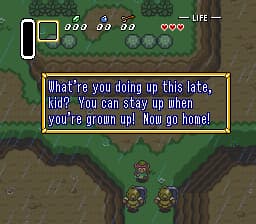
EchoParkMacPC would later go on to mod six games in the series to have completely gender neutral pronouns. While several old internet comments on sites like GameFAQs claim that these mods ruin the story of the franchise, as Link was always meant to be a man, there have also been plenty of non-binary and other gender non-conforming people over the years who have used these mods to see themselves in Link, which is the character’s purpose.
With the demand to play as Linkle being higher than ever, is there a chance of seeing her again? Would Nintendo add an option to allow players to select the gender of one of their biggest mascots? Well, let’s look over the company’s track record.
While the internet has often joked about Nintendo being slower than other game companies when it comes to adopting new technologies, the publisher has typically been ahead of the curve with regards to allowing gender expression in their larger franchises.
A prime example of this can be seen in the big N’s flagship tactical RPG franchise, Fire Emblem. Unlike Zelda, every Fire Emblem game has had a defined protagonist with their own personality and dialogue (Except for Byleth in Three Houses, who is silent like Link). Despite that, every new entry in the franchise since 2012’s Fire Emblem: Awakening has allowed players to, at minimum, choose their gender. Heck, the most recent game in the franchise even allowed players to marry anyone regardless of gender.
Some titles under the publisher’s belt have even begun to do away with the concept of gender altogether. The Splatoon franchise currently allows players to use any hairstyle on their Inkling or Octoling, and dress them in any outfit available. Even if you identify as a boy, there is no shame in wearing a skirt in this game.
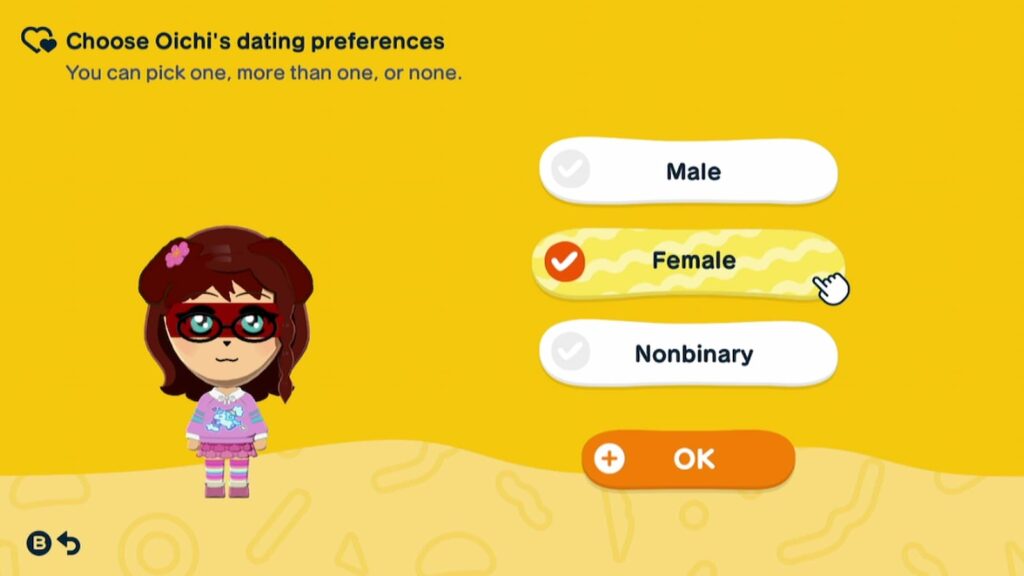
Most recently, Tomodachi Life: Living the Dream allowed players to not only set the romantic gender preferences of their Miis any way they wanted, but also allowed for the creation of non-binary Miis. While I wouldn’t describe any Nintendo game, or any mainstream game in general, as the most progressive media out there, there has been a clear attempt in recent years to include more minority representation in these games.
Given this track record, I could probably stop here and argue that Nintendo should extend the same treatment to Ocarina of Time and allow players to control a girl this time around.
Sadly, I don’t think it’s happening.
Zelda, in particular, has always lagged behind other Nintendo franchises when it comes to gender and gender expression. In fact, I would argue that the franchise has dipped into being problematic more often than not. The subject of the recent remake, Ocarina of Time, introduced four adult male carpenter characters who refer to themselves with the “atashi” pronoun in Japanese, run in a stereotypically girly fashion, call Link a “cute boy”, and wish to join the Gerudo before they get arrested for trying to infiltrate the all-female society. Most of this was toned down in the game’s localization, but the original intent remains.
The most influential and beloved game in the Zelda franchise contains a mean-spirited joke about the LGBTQIA+ community, and it’s not like this was a one-and-done deal. The four carpenters became recurring characters in the franchise, appearing in four games. Even when these characters stopped appearing, their legacy remains via a character in Breath of the Wild named Bolson, who has inherited all their stereotypical ‘okama’ traits.
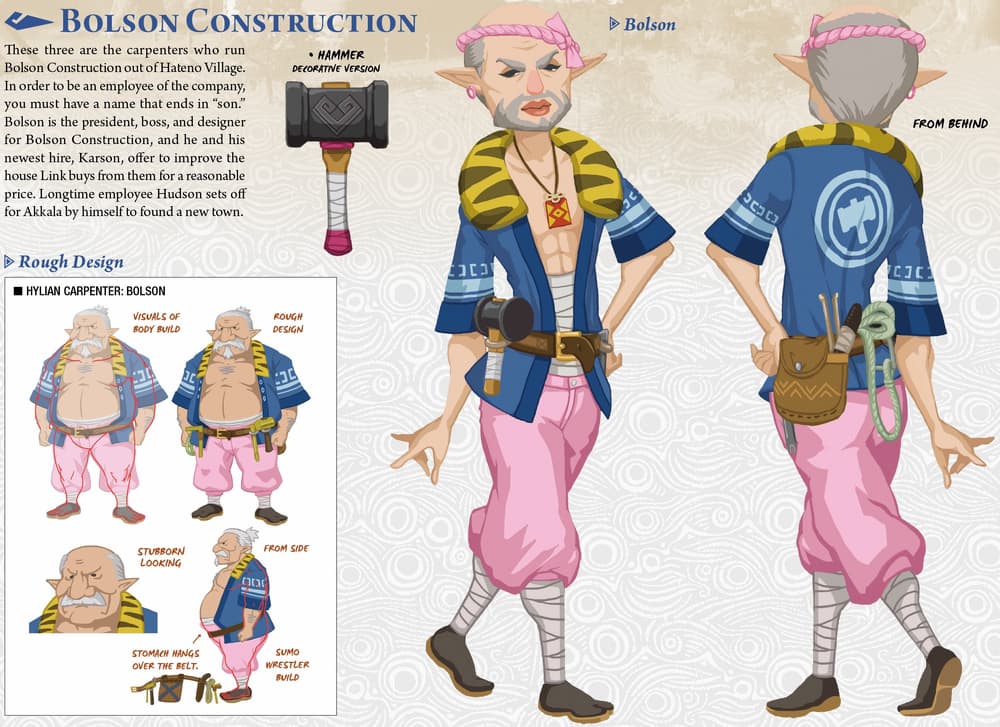
And the franchise just keeps making jokes like that. If a character in a Zelda game isn’t acting in a gender conforming manner, it’s either as a complete joke or used as a method to make a character seem more sinister, like with the secondary antagonist Ghirahim in Skyward Sword.
The worst of this, in my opinion, came with 2017’s The Legend of Zelda: Breath of the Wild, also featuring a transphobic joke about a man disguising himself as a woman to infiltrate Gerudo society. It’s even punctuated by a “humorous” punchline in which his facial hair gets exposed.
Some may point to how this same questline allows Link to dress in women’s clothes as a sign that the series is willing to be more open about gender non-conformity these days. Heck, I even brought it up earlier when speaking about how fans would use this outfit out of a desire for a more feminine Link. However, even if we put aside the cultural insensitivity of the Gerudo clothes, the game treats Link wearing an outfit like this as nothing more than a joke. A joke that the developers clearly didn’t intend to last longer than a few minutes, as you aren’t even able to upgrade this outfit like every other piece of clothing in the game.
It’s just a sad truth that, while I love the Zelda franchise, it’s probably the most straight/cisgender-centric franchise in Nintendo’s catalog currently. There is very little I can see of myself in Link when the games are constantly having moments like Breath of the Wild’s Gerudo questline.
So do I expect there to be a playable female version of Link in the upcoming remake? Not a chance. While Nintendo has gotten bolder with gender expression in their other franchises, I’ve yet to see evidence that they would do so with The Legend of Zelda. I would love nothing more than to be proven wrong about this, though, and maybe in the future I will be. For now, though, I suppose I’ll have to make do with seeing fans insert Linkle into each game themselves.


cool article
i feel like they’re really stubborn in thinking that “you have to play as link who is male” at all costs for some reason and it’ll take a few more years for them to realize it doesn’t matter
in a way there’s probably a bigger chance of them making a game where link can turn into a woman at will like the wolf transformation, than just letting you choose a female version at the beginning of the game