
Want to see Raider King content first? Add us as a preferred source.
This year, I attended PAX East 2026 as a representative for Raider King. While I was there, I had the opportunity to try out several upcoming games from many up-and-coming developers. Because there were hundreds of games and people at the convention, I sadly wasn’t able to try everything during the time I was there. However, of those I did get to try, there were some real hidden gems. If you didn’t get a chance to go to the event or just didn’t have time to try out a ton of games, then please consider checking out the following list of promising games at PAX East 2026.
End of the Line New Age
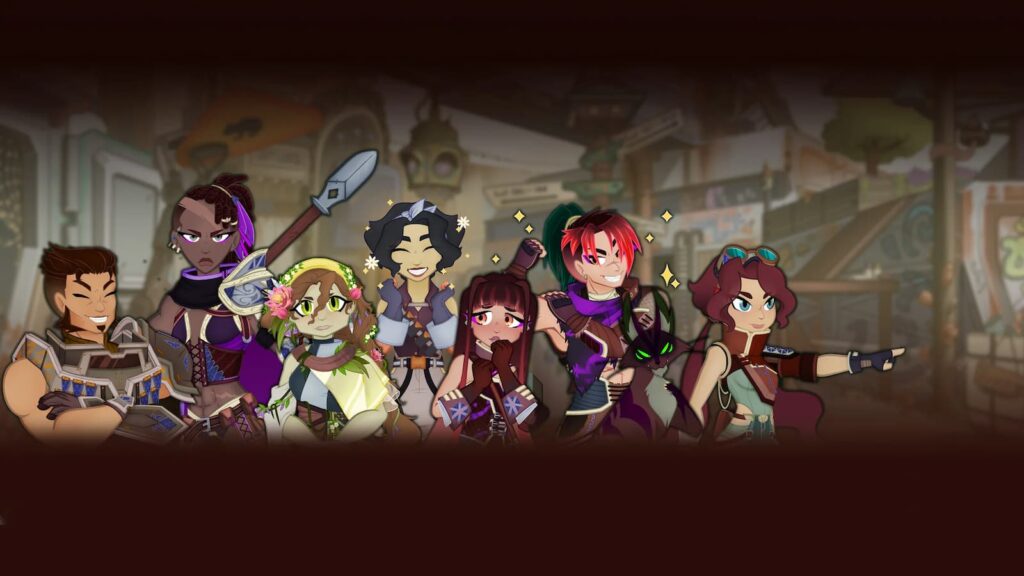
The first game I visited during my time at PAX East 2026 is also the first one I will be highlighting in this feature. The End of the Line: New Age, an upcoming gacha game from Legio Vox Studios with turn-based RPG combat. Demoing a gacha game can be quite tricky, as you have no guarantee that what you are experiencing will be indicative of the random nature of the game, but considering that what was shown seemed to be a tutorial area, I will have some faith that a normal gameplay experience won’t differ too much.
Combat in this title takes the form of a traditional turn-based RPG, with your party being composed of four active members and two support characters. Each member of your party has multiple skills they can perform that will target enemies in different ways. Some attacks may only target a single enemy while others might attack an entire line, with it being up to the player to decide which attack is best for any given situation.
When attacking foes or casting buffs on allies, the player will have the opportunity to tap their screen at the right time to increase the effectiveness of their skill. Correct timing can be the difference between life and death in some situations, and the timing for these taps is different for each character.
While the combat in End of the Line New Age was conceptually interesting, it was held back by one glaring issue: the speed. Or rather, the lack of speed. Combat animations in this game, from both allies and enemies, are incredibly slow. While this was likely done to accommodate the player needing to tap the screen for more severe damage, the result is that battles take far too long to resolve.
Aside from combat, the game also features an interesting method of exploring the world that feels quite unique for a gacha game. Each area of the game is made of hexagons that the player can walk to by tapping on them. While the player is moving, enemies will appear and move on these tiles as well. This allows the player to pick and choose what battles they get into by avoiding or walking into enemies.
The character designs and art in this game were also quite interesting, with Iris being a particular highlight for me. While it is very different from most other gachas on the market currently, that may help it stand out in the end.
Overall, I had a decent time trying out The End of the Line: New Age despite issues with how slow the combat animations were, and I wish the developers luck in reaching an audience that enjoys both gacha games and turn-based RPGs.
Never’s End

Next, I would like to highlight an upcoming SRPG called Never’s End from Hypersect. This isometric strategy game sees the player take control of a spirit to possess various villagers to make them fight against monsters in turn-based combat. Instead of being stage-based, Never’s End takes place on a semi-open world grid where the player will be walking from area to area and getting into encounters.
While that concept alone would have made this game unique, what truly makes this Never’s End shine is the combat system and how much freedom the player is given to use their arsenal however they wish.
The number of ways the environment can be utilized to the player’s advantage and disadvantage in this game is awe-inspiring. Despite only having access to a single spell in the demo, I felt like an entire world of possibilities was open to me.
This spell, one which allowed me to transplant the heat from one tile to another, could be used to create wind that pushes an enemy due to the change in humidity. This can, of course, be chained multiple times to send enemies far away and into obstacles that may harm them.
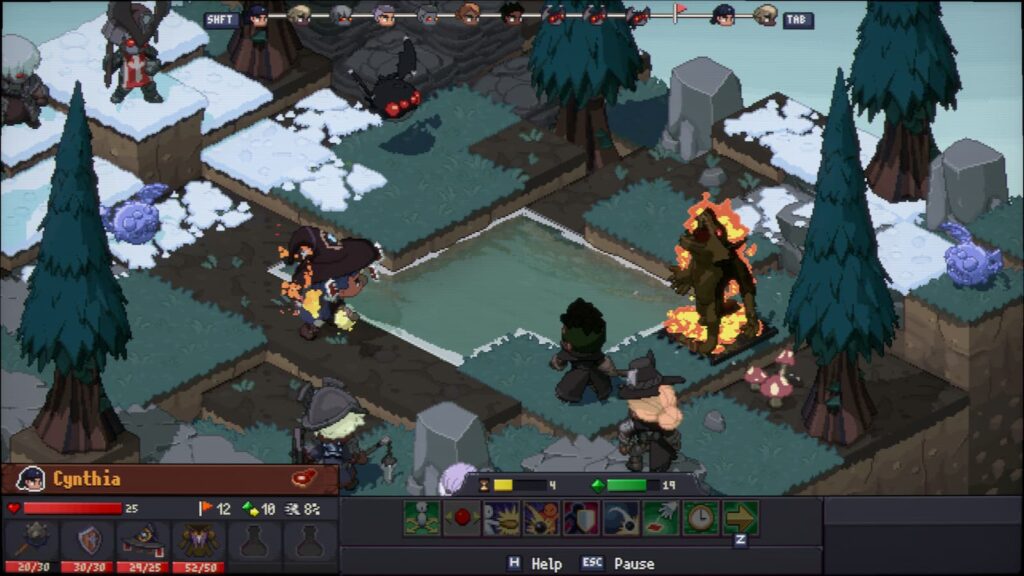
That spell and the ways it can be used are only one example of how versatile Never’s Ends‘ combat and environment system will be. While talking with one of the game’s developers, they told me about other mechanics, such as breaking apart cacti to use their water to cure characters who have been set aflame or cast fire on characters who have the bleed status to cauterize their wounds, taking a heavy amount of damage in the moment in order to prevent taking continuous damage throughout the fight.
Time of day is also an important factor in the environment that will play a role in combat. During the night, each tile is colder by default. Characters who are too cold or get hit with an ice spell may be frozen. Like every other aspect of the game, the player can make use of this in multiple ways. A frozen character will be unable to move, and therefore will have their turn skipped, but they will also be kept safe from damage, as enemies will need to spend time breaking the ice to get to them. This will give you a short opportunity to heal and save said character.
There is no shortage of ways the player can take advantage of the environment and their spells in this game. I feel that even with the time I have spent with the demo, I have only scratched the surface of what this game will have to offer.
The fights I got to try in the Never’s End demo let me know right away that this game is for those who are veterans of the SRPG genre. Even I, someone who has played this style of game for decades, had quite a bit of trouble and even died to the boss due to a few careless moves. However, at no point did the game feel unfair, and even now I’m wishing I had just played slightly differently in order to win.
With an incredibly complex battle system that rewards experimentation and isn’t afraid to pull its punches, any veteran of the SRPG genre will find themselves at home with Never’s End, which is scheduled to release in 2026 and currently has a demo available to play on Steam.
The Piper of Dawn

When I walked up to the booth for The Piper of Dawn by Bone Nail and saw the game’s key art, I would have never guessed what genre of game this was. Especially after the lengthy Visual Novel-esque opening sequence. The amount of tonal whiplash one will experience after transitioning from the tense opening sequence, where you are playing a card game with death, into the actual gameplay, where you must tend to your brightly colored farm, cannot be overstated. The Piper of Dawn appears to be a game that thrives on tonal changes like this, as it was not the last of its kind.
Later in the demo, the player will encounter a corpse in their garden. This won’t affect your day-to-day life, though, as there is a rule in this town about how if an impossible crime is discovered, then it should be ignored for at least a month. This immediately sets the stage that the player has awoken in a strange world with strange rules, but what could you do about them other than wake up and get to work on farming your crops?
As for the gameplay itself, it is about what one would expect from an idle farming game. The player is expected to take care of their farm by clearing away weeds, planting seeds, and, of course, watering them. Gameplay is done entirely by clicking on objects with no walking around required for the player.

After a crop is planted and watered, all the player needs to do is wait for the timer to clear and then harvest it. While waiting for these timers, the player can occupy themselves with either clearing out more space on their farm or building new tools that can produce other types of produce. This led to an experience where, even while I was waiting to harvest my crops, I still had busywork to handle.
While you are free to plant whatever you wish, the game has a menu full of quests that require you to deliver specific items in order to get paid, and more importantly, to progress the story. This creates a simple and satisfying gameplay loop where the player gets to read a small amount of story after every crop waiting session.
I did not make a lot of progress in the demo during my time at PAX, as waiting around for crops to grow, as other people waited at the demo booth, felt too awkward, but I was able to clear a few of the game’s missions and can easily see this becoming a nice and relaxing idle experience for gamers interested in this genre.
The Piper of Dawn is a game that I plan to keep my eye on for now, as it’s. If nothing else, I would like to see more of the funny cat with the large unibrow that greets the player when they first awaken on their farm. The game currently has a demo available on Steam for anyone interested in checking it out.
Kotama and Academy Citadel

At the same booth as The Piper of Dawn was another game published by 2P Games earlier this year: Kotama and Academy Citadel from Atomstring Games. This Metroidvania flew under my radar earlier back in January, but I am very glad it was on display at PAX for me to try out myself. Because this genre of gaming is defined by exploration and how it feels to navigate your way around an area, we’ll begin by talking about the player’s movement options and what they can expect from this game.
Like any decent Metroidvania, exploration is made fun in Kotama and Academy Citadel. The player has access not just to expected maneuver options like a double jump to reach high ledges and a slide to get through tight spaces, but also fun and unique movement options like an umbrella that can be used to slow down the speed of your fall.
The feeling of spotting an optional goodie like a treasure chest in one room which you cannot reach only to backtrack later with a new ability to grab it is incredibly satisfying, especially with how confined the area in the demo was as it allowed me to quickly make my way back to where I saw the item and grab it without feeling like I was wasting any time.
While the focus of any Metroidvania is exploration, I would like to spend most of my time highlighting this game to talk about the combat system, as that’s where I feel Kotama and Academy Citadel truly shine.
When fighting enemies in Kotama, the player will slowly fill up a meter near the top of the screen with each attack they land. When standing still, the player can press a button to exchange this meter for health, allowing you to fight through packs of enemies without feeling stressed about the possibility of being sent to a previous checkpoint, as you can always heal yourself.
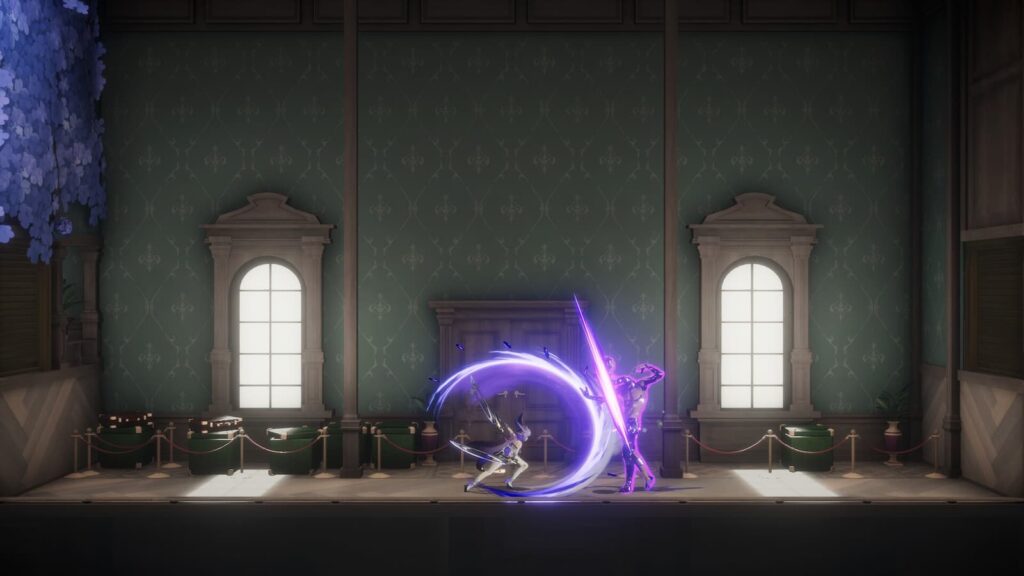
Attacking enemies in this game repeatedly will cause them to glow purple. Activating your special attack against enemies that are purple will instantly defeat weaker opponents and stun both bosses and minibosses. In addition to this, the game features a parry button, which allows the player to block certain attacks from bosses. Performing a successful parry will stun said enemy immediately.
This leads to an incredibly satisfying experience where the player can parry an enemy to stun them briefly, perform a series of attacks to turn them purple, and then use their special attack to stun them again for even more damage. While there were only a few minibosses in the demo to try this strategy out on, I found it to be incredibly satisfying and made me want to play more just to perfect the art of chaining stuns together.
With an incredibly fun combat system which perfectly complements the exploration mechanics of a Metroidvania, Kotama and Academy Citadel’s demo was a truly enjoyable experience, and I plan to pick the game up to play on Steam sometime in the near future.
Dine and Duel

Highlighting and encouraging games made by students who took the time to both develop their first game and showcase it at a place like PAX is just as important as talking about the larger games that have been picked up by publishers. One student-made game that I tried out while walking around the expo floor was a competitive cooking game/shooter called Dine and Duel by Cheffie/VideoJames.
This game’s central concept is about players creating weapons out of food found around their kitchen before going out and dueling each other in a match to the death. With a goofy satirical concept like that, one can’t help but smile at the game’s charm.
The meat and bones of this game are all about the cooking aspect, where the player must prepare three ingredients to form their weapon. The kitchen has recipe lists for three different weapon types that the player must follow. Preparing these ingredients can be as simple as placing the raw material on their desk to needing to clear out a boiling pot that’s filled with shrimp.
While the concept of the game was cool, a few glaring flaws with it became clear during my short time playing the game. One of these issues is that once one player has successfully cooked their weapon, there is nothing for them to do until the other player cooks theirs. This can result in a several-minute wait time where one player is doing nothing as the other fumbles their way through the kitchen.
Another issue I must bring up is that I feel the game could have been clearer about how to use various tools in the kitchen. While I knew exactly what I needed to do for each recipe, I myself fumbled with tasks like boiling shrimp. While this wasn’t a major issue like the waiting can be, I do think the game can be clearer about steps during the cooking process.
Once the weapons have been cooked, both players have to quickly shoot each other in a best two out of three duel. This part of the game takes significantly less time than the cooking portion and is about what one would expect from a shooter. All I can really say about it is that the shrimp cannon is much less useful than one would expect it to be.
While Dine and Duel’s demo is a very amateur showcase, I do find the idea interesting and the creativity in achieving it to be splendid. At this moment, I am sure that Cheffie/VideoJames, the developer of the game, will go on to do great things in their game development future.
Aether & Iron

Another RPG from PAX East 2026 that I would like to highlight is Seismic Squirrel’s Aether & Iron. This RPG is much more dialogue focused than others earlier in this article and features a fascinating steampunk setting.
Aether & Iron is an incredibly story-driven game where the player can spend hours simply talking to other characters and examining objects in the environment. When speaking to a character or investigating certain items, the player will often have the option to roll a die in order to steer the conversation in a certain direction to get the outcome they desire
While any dialogue I had to roll for during the demo was relatively forgiving with the numbers that I needed, I can easily imagine scenarios later in the game that require either stricter numbers or higher stats to achieve.
The steampunk noir aesthetic of Aether & Iron was on point. From the designs of the environments to the character designs, this felt like a glimpse into another world that I greatly enjoyed. Something which added to the aesthetic was that whenever the main character needed to narrate to herself, she would turn monochrome. While this was done as a way of visually indicating that she wasn’t speaking aloud, it added to the noir aesthetic greatly.
One detail that I greatly enjoyed was that during the rare times where I did fail a roll, the protagonist would fumble during the following dialogue and provide a unique conversation. Moments like that can make even failure seem worthwhile and enjoyable in this style of game. Seeing a game like this, with hours upon hours of dialogue, be fully voiced is awe inspiring. This goes double when you consider that the game was developed by a small team of passionate developers.
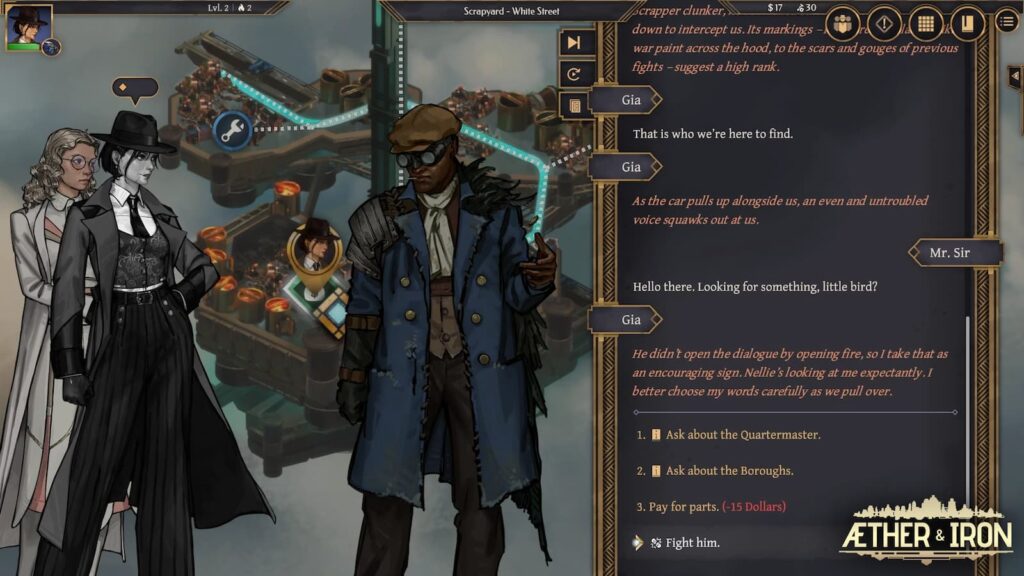
As for the game’s combat, I only got to briefly experience this aspect of the game during my time with the demo and thus will be spending less time talking about it. Combat in Aether & Iron takes the form of a turn-based strategy RPG where the player controls their car rather than their character. Each turn, the player will be able to take an action that will both attack enemies and likely move your car, potentially opening you to attacks from nearby foes.
Each car in the game can be customized with different equipment to suit the situation, based on the number of slots available on each vehicle. For those who like a bit of personal touch in games, you can also change the color of your car to whatever you want.
With four potential heroes to recruit and a party size of up to three cars, I can easily see how battles later in this game will become more chaotic and require a bit more thinking on the player’s part.
Be cautious during combat though, as civilians are also present on the road, along with enemies. Killing civilians will increase your heat, which can attract more enemies to your fight and also affect your personality stats. A player who hasn’t attracted a lot of heat may have trouble intimidating characters during conversation, while a player with a lot of heat may have trouble convincing characters that they are trustworthy.
While I only got to scratch the surface of what Aether & Iron has to offer during my hour trying the game at PAX this year, I could immediately tell that this game has the potential to be something great. Aether & Iron was actually released during the showcase, and after playing through that wonderful demo, I feel more than tempted to pick up and play the game myself when I have a chance.
GNAW
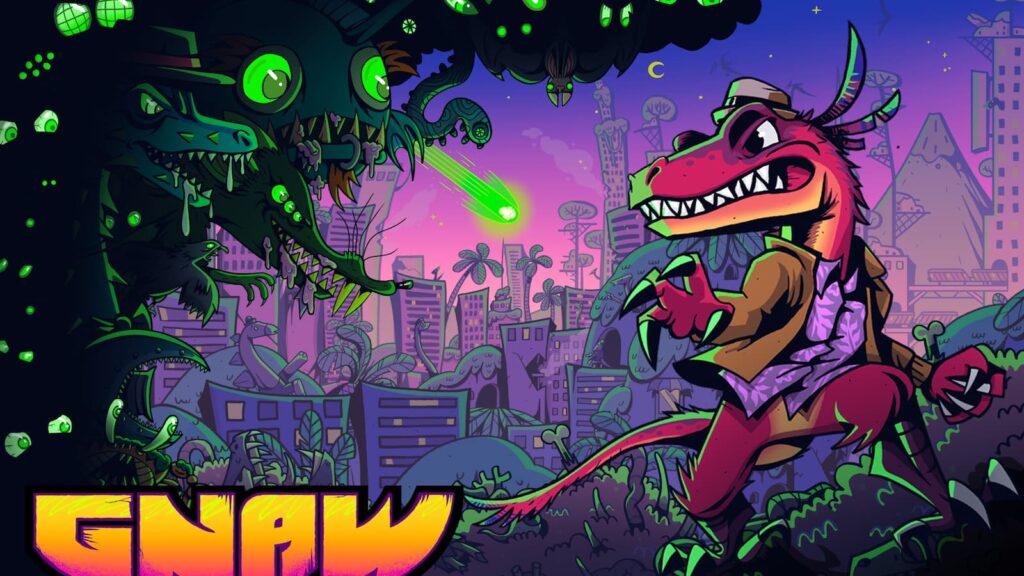
Due to how versatile the concept of a Metroidvania is, some game developers have been experimenting with exactly what could be done with the genre. One game that takes the genre into a wild direction is Redstart Interactive’s GNAW, a game where you play as a dinosaur named Mack and have to navigate your way through a city populated entirely by other dinos.
Because Mack is a dinosaur, you won’t be making your way around the city and fighting enemies by holding a weapon or using items. Instead, you’ll be taking care of foes via a satisfying chomp. Aside from being fun, the animation that plays when you chomp on enemies is satisfying and playful enough to enjoy repeatedly.
Mack’s lack of opposable thumbs and how that affects the game design also extends to the game’s navigation and the player’s movement options. From using your jaw to grab objects to charging headfirst to go through a small gap, any expected Metroidvania feature has been twisted to accommodate the protagonist’s unique body type.
There is a great sense of speed to GNAW’s gameplay. Because Mack is almost always running, the player is going to quickly make their way from room to room at a brisk pace, with only enemies slowing them down (And even then, no foe aside from bosses is going to take more than a few bites to take down).
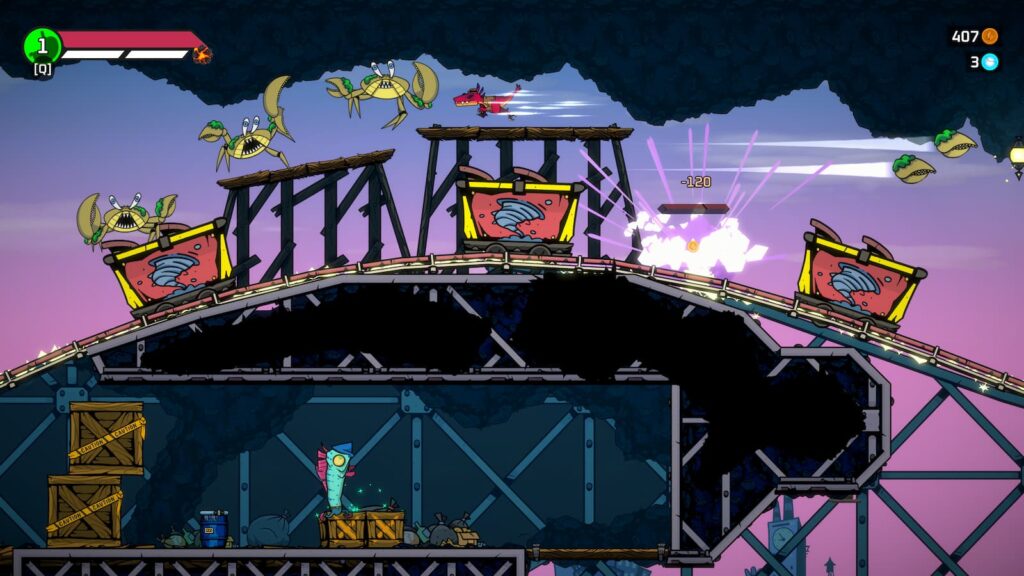
Visually, I love the cartoonish world of GNAW. I already explained that the silly animation that plays when defeating enemies is pleasing and that extends to the whole game. The sprites for every enemy, NPC, and especially Mack himself are beautifully drawn and make this one of the most unique-looking games in the genre.
If there is any complaint I had with this demo, it’s that occasionally I couldn’t quite see objects such as lanterns you could bite and swing from, as they blended into the background. However, I am willing to blame this on my own eyesight, as I stayed and watched two other people play the demo and quickly grabbed onto these lanterns. This was just a small price to pay for the environments in this title looking as good as they do.
While I was playing through GNAW via the developer’s Steam Deck at the showcase, my attention couldn’t help but be drawn to the publicly available PC and demo near me. There, a young child had gotten their hands on the game and appeared to be having a blast as they played through the tutorial. I believe that above all else will be indicative of this game’s quality and how it will be greatly enjoyed if it reaches the correct audience.
GNAW’s demo is currently available to download on Steam. While the game has no currently stated release date, I am sure that fans of this genre of game will greatly enjoy their time with the demo in the meantime.
Royalty Free for All
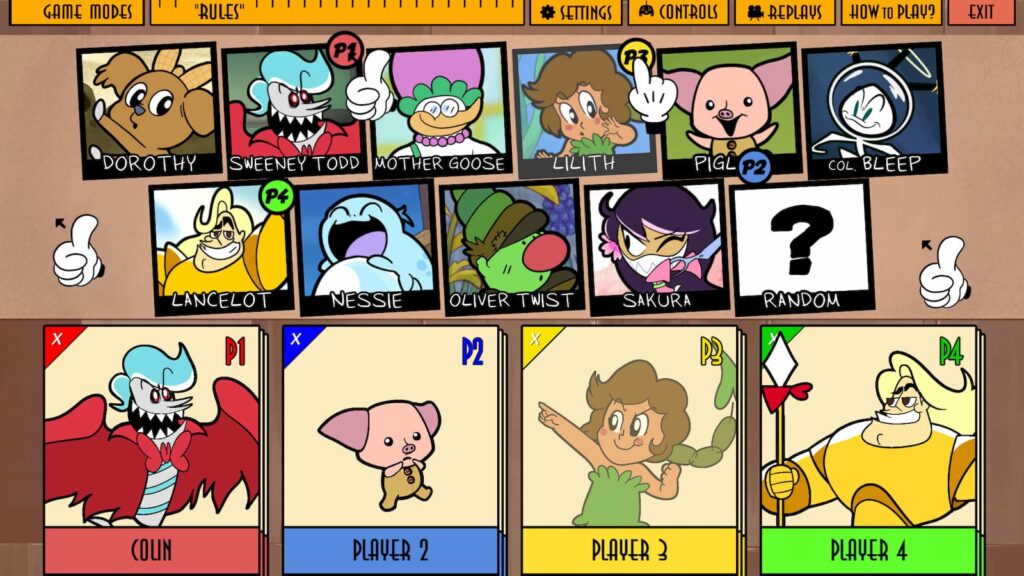
Next, I would like to speak about an indie platformer fighter with a unique roster concept: Every character featured in it is a famous fictional character who is in the public domain. This game is Royalty Free-For-All from AAAA Games, LLC, and it is one of the most charming experiences I had at PAX East 2026.
Featuring characters like Piglet from Winnie the Pooh and Dorothy from The Wizard of Oz, this Platformer Fighter is as chaotic as you would expect. As characters create tornadoes, snip you with scissors, or just plain punch with a series of normal and special attacks to launch you across the screen.
The stage I played on had a main section in the center, as well as two ledges near the top of the screen that players could opt to camp or fight on. With four players blasting each other around the stage, the area where you were fighting was constantly changing while still being tight enough that you were always around at least one other player.
Despite being a non-competitive game that, according to the developers, is more inspired by Smash 64 than other games in the genre, the game still featured mechanics that are sure to interest hardcore gamers, like wavedashing, according to the tips that appeared when the game was loading a match.
Overall, I found my short experience with Royalty Free-For-All to be quite a blast. I may have gotten last place in the match I played, but I had a fun time while doing so, and for this subgenre of fighting game, that is the most important factor.

Visually, Royalty Free-For-All is a very beautiful game with hand-drawn artwork that expresses each character’s personality perfectly within each of their short animations. Due to its concept, this is a game that lives and dies on its character designs, and I’m glad to report that they are exactly what they need to be.
While the visuals and combat animations of Royalty Free for All were very fun, I couldn’t help but notice a glaring issue with the game’s sound design. As I played a match with other people on the expo floor, it became very obvious that most attacks either didn’t have sound effects tied to them or they were so quiet that they could not be heard.
If you are a fan of fighting games like this one, then you can’t go wrong with wishlisting Royalty Free-For-All on Steam.
GHOST EATER
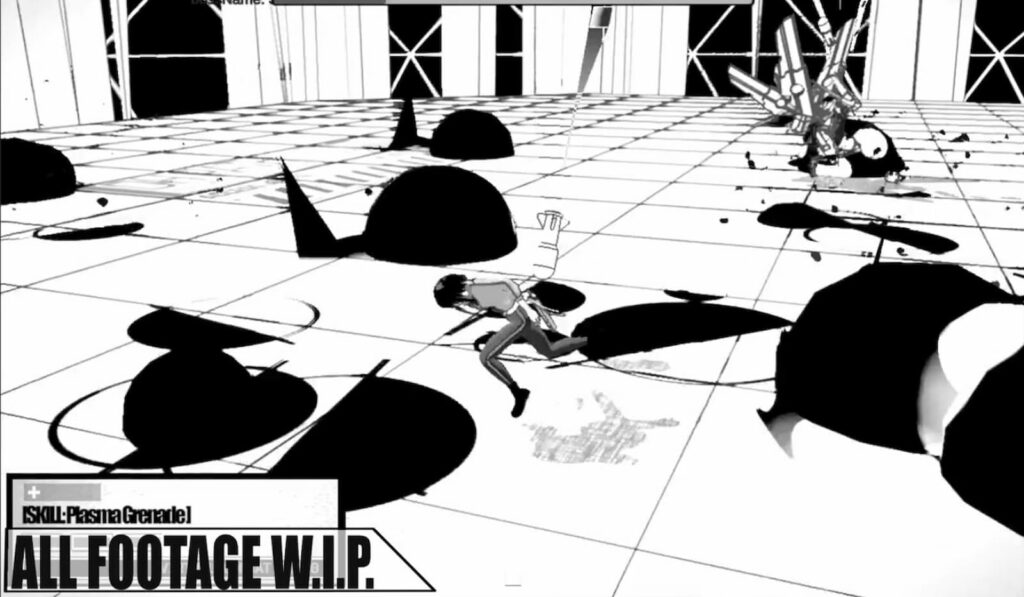
One game I nearly missed, but am very glad I didn’t, when walking through the expo hall was Greenbullet’s GHOST EATER. This upcoming title is a stylish character action game with a very unique black and white manga-inspired art style.
Gameplay in GHOST EATER is similar to many other character action games in the market, as the player fights enemies with a combination of light attacks, heavy attacks, a ranged weapon, and skills. These mechanics form the basics of the character action genre and are expected to be seen in a game like this. While the combat of Ghost Eater is bringing little new to the table, the game controls are as smooth as butter, and using these attacks to break apart enemies felt fun from start to finish.
The other major gameplay mechanic shown off during this demo was the protagonist’s ability to hack machines in order to make them perform various tasks, like opening doors for you. Hacking machines in this game doesn’t lead to some sort of hacking minigame separate from the main gameplay, but rather sends the player into a series of rooms where they must defeat hordes of enemies in order to progress. This creates a fun experience where players are constantly testing their combat skills throughout the game.
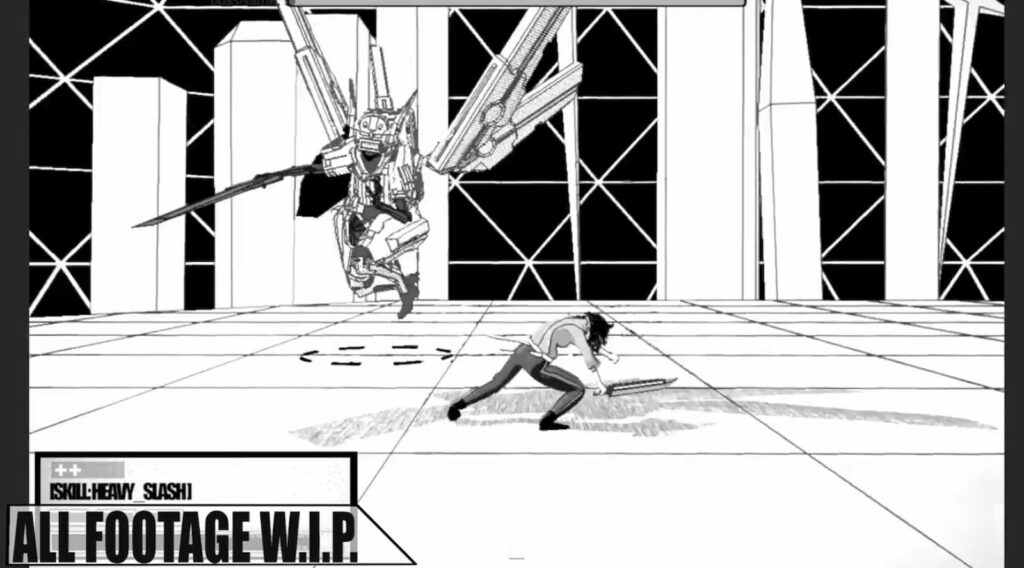
Once a machine is hacked, the player will be sent to a screen where they can control what this hacked machine and any other linked machine do, this of course, includes blowing themselves up. Which, while I imagine would be useful for a destructive machine, was not so useful for the tool in the tutorial room.
Thankfully, the demo was idiot-proofed for people like me who accidentally choose to blow up the machine they just hacked, but I imagine later parts of the game will be less willing to hold my hand or will actively punish me for doing the wrong thing.
What really makes Ghost Eater stand out from other games in the genre is, of course, its aesthetic. Despite the game’s color palette consisting only of various shades of black and white, everything that the player needs to see stands out, and at no point did I feel confused about where to go. Sequences like the train at the beginning of the first non-tutorial stage, in particular, felt beautiful to look at.
With fun gameplay and a unique aesthetic, I’m sure that fans of the character action subgenre will feel right at home with this title. As a big fan of this genre myself, I have already wishlisted Ghost Eater on Steam and will be keeping a close eye on it and hope it releases sometime in the near future.
The Weeping Swan: Ten Days of the City’s Fall

I love visual novels and think they are one of the most underrated genres in gaming. Unfortunately, they are also incredibly difficult to review and create coverage for due to how different they are from all other gaming genres. So allow me to indulge myself by talking about one I was impressed with at PAX East 2026. That being: The Weeping Swan: Ten Days of the City’s Fall from ZerocreationGame.
This Visual Novel, set in Ming Dynasty-era China, follows the scholar Fang Zhiyou as he find himself in the Lion-Camel Kingdom from Journey to the West. There, he finds the city under siege and a young girl whom he vows to protect until the end of this massacre.
From just the brief amount of time I spent in the main character’s shoes, I could tell that this protagonist would be a treat. From the moment the game begins, he starts to hallucinate ordinary men as the animals they are, only to snap back to reality a few minutes later. Zhiyou clearly resents the world he is in and the people around him. Before the massacre in the city begins, he spends his time wandering the streets, listening to those around him, and laughing in a way that can only be described as disturbing.
While I do not have much more to talk about for the game’s story, as I was only able to experience the first half hour, I was almost immediately intrigued and became curious about how this game’s plot and, more importantly, its protagonist’s development would unfold.

Visually, the CGs in this title were quite impressive and a good display of the art team’s skill. The amount of CGs in this game were also plentiful and nicely broke up scenes that otherwise would use the various streets and alleyways of the city as a background.
I do have one complaint with the game’s visuals, and that has to do with the dialogue sprites when they appear. Many characters in the game stare directly at the player when speaking in a way that can be seen as uncanny. I much prefer when characters are drawn at a 3/4th view, which gives the player a better view of their design. This isn’t a problem with every sprite in this game, but it happened often enough that I felt the need to address it.
The Weeping Swan: Ten Days of the City’s Fall has actually been released on Steam in the time between me playing its demo at PAX and publishing this article. If you are a fan of Visual Novels and stories set in historical China, then consider checking out The Weeping Swan: Ten Days of the City’s Fall.
Fractured Blooms
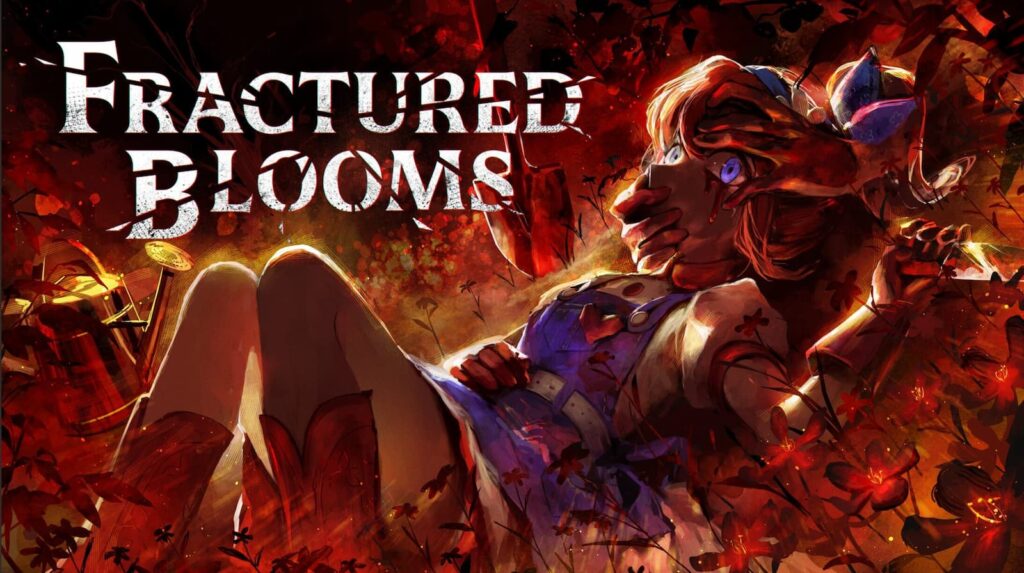
Finally, I would like to highlight the last game I demoed before leaving PAX this year: Serenity’s Forge’s Fractured Blooms. Similar to The Piper of Dawn earlier in this feature, this is a game where the player must tend to a farm and grow crops. This game however, takes that concept to a much darker direction and provides gamers with a true horror experience.
The demo begins sad, but relatively normal. As you work on your farm, the narrator will talk about how depressed she feels and how it feels like she lost the chance to pursue her dreams. From her perspective, the player must go through a day of her mundane life, tending to the garden, cooking dinner, and doing laundry before bed.
By the time you have completed the laundry (which is on a timer that requires you to rush around the house collecting clothes), you’ll likely not have much time to sleep and therefore less energy to work on the farm the next day. Not that it would matter, as that’s when the second voice begins to whisper in your ear.
During the player’s second day on the farm, a cheerful voice will encourage them to go against what the narrator is supposed to be doing. After all, it’s your garden. Why not plant the flowers instead of the tomatoes? Why not indulge in the small things that make you happy? You likely won’t have any energy to do more than that, but it’s your choice.
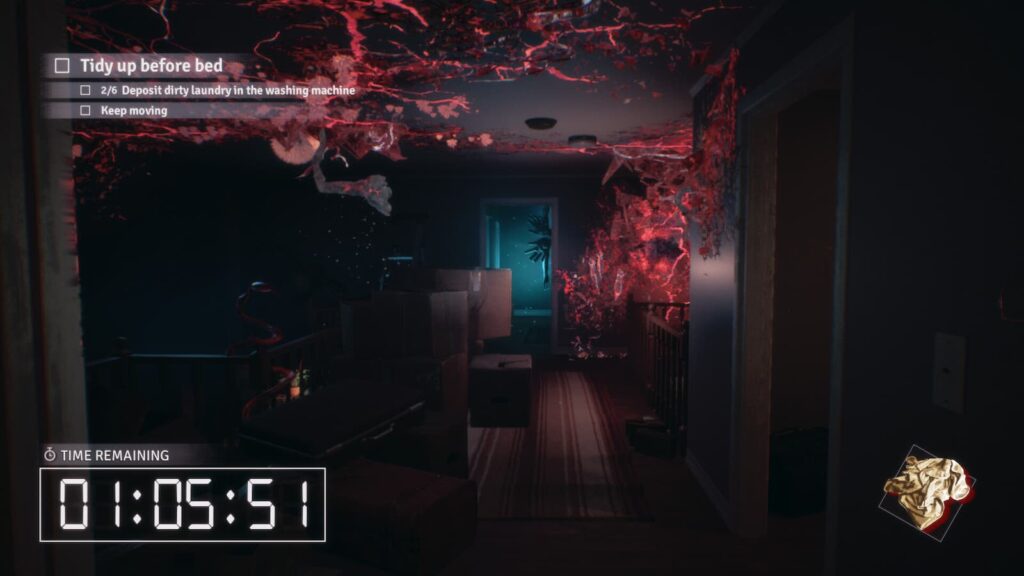
This is when Fractured Blooms transitions from a depressing experience into a terrifying one. Horror in gaming thrives not only on the big and bombastic scares but also on the subtle feeling of dread one gets when they know something is wrong but don’t know what to expect. Seeing the objective in the top right of the screen change from farm work to “It’s not safe to be outside” is a moment that has stuck with me in the days since I have played the demo.
The second day of the game gives the player the exact same tasks as the first day, but with the voice constantly whispering in their ear to make it impossible. This cheerful voice does everything in its power to prevent the player from succumbing to their mundane life and make them fail to do their tasks. Something as simple as counting for thirty seconds to make sure dinner is cooked right becomes a hurdle as the cheerful voice begins a song about counting.
With each task you fail, the original narrator becomes more and more depressed, all culminating in a final terrifying sequence that will leave the player on the edge of their seat and begging for more. This was an excellent demo to end my PAX East experience on, and a title that I will be sure to keep my eye on in the future.
Fractured Blooms currently has no stated release date, but I would heavily encourage fans of horror games to try out this game’s demo to see a very promising horror experience.
Closing Thoughts
While there were other demos I visited at PAX East this year, I felt like highlighting the games in this article, as they showcase a wide variety of genres and games from smaller developers. I heavily encourage anyone reading this to look into these games, try out their demos if they’re publicly available, and maybe even wishlist a few of them.
The games on display at this year’s PAX East expo floor were quite a sight to behold. Many developers, big and small, were putting their best foot forward to showcase the best of what the gaming industry has to offer. Aside from the games highlighted in this article, I also took the time to try out a few other games such as Spider Lily (Which has made massive strides in the past year) and Rain98 (An upcoming Visual Novel that is looking like a must-play) and gave them full preview features. I hope that next year’s PAX has games even half as good as the ones I demoed this year.