Want to see Raider King content first? Add us as a preferred source.
This summer, Nippon Ichi Software will be releasing Disgaea Mayhem, an action game spinoff of the world-famous Strategy RPG series Disgaea. This title, very clearly inspired by the gameplay of Koei’s Dynasty Warriors franchise, will give players a taste of Nippon Icchi’s interpretation of the growing Musou subgenre of gaming. With a wide variety of weapons to choose from and the opportunity to hack and slash your way through the world of Disgaea, this game sounds like a dream for fans of the franchise. Will this title be worth checking out, or should Disgaea fans just stick to the SRPGs? Let’s dissect the PAX East 2026 Demo of the game and decide for ourselves.
This article will be quite different from other reviews and previews I have written in the past, as I have long claimed that the Musou subgenre is one of the greatest in gaming and have studied exactly what makes it work for decades. Because of this, I feel it is my duty to write this preview from the perspective of how the game holds up as a Musou game, rather than as a Disgaea game. As such, we will analyze the map design, moveset design, and various small quirks to determine if this game holds up compared to other Musou-likes, such as Fate/Extella or Utawarerumono Zan.
We’ll start by discussing an aspect that the game could live and die on: The weapon movesets. If the weapons aren’t fun to use, then it would be difficult to justify taking the time to fight through hundreds of enemies with them. During my short time with the demo, I tried out three of the game’s weapons, which all have their own movesets. I tested out the spear, the gun, and the staff. I felt these three weapons would give me a good feel for how movesets in this game would be designed, and the best way I can describe them is unconventional.
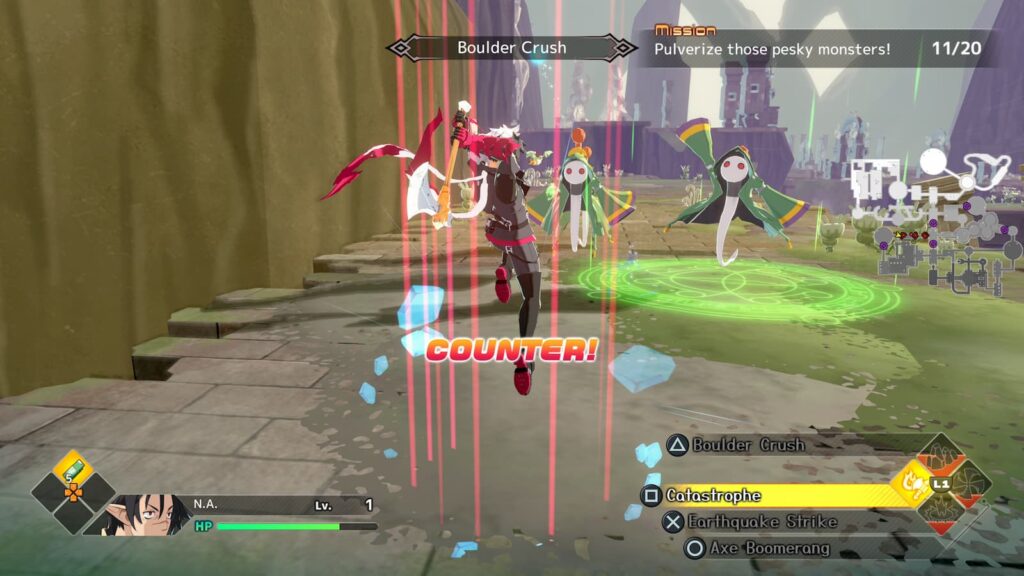
Attacks in Disgaea Mayhem do not follow typical Musou archetypes, such as having your character perform a wide-reaching AoE attack if you press the heavy attack button in the middle of your combo instead of near the beginning or end of it. Instead, both the spear and gun movesets seemed to have an emphasis on having your heavy attacks either move you toward or away from enemies. This isn’t necessarily a bad way to design a moveset (in fact, I was glad to see the game not fall into too many genre conventions), but it might take some getting used to for genre veterans.
The most unique weapon I got to try during the demo was the staff. Unlike every other weapon, you cannot attack enemies repeatedly with the staff. Instead, you need to wait for orbs to passively appear around your character before launching them directly at foes for massive damage.
This is an incredibly interesting gimmick for a Musou weapon that I have never seen in any game before. While it wasn’t my favorite weapon to try, as waiting around for a single attack to charge does feel quite awkward, I do need to commend the developers for even thinking of and implementing this gimmick.
This subgenre of action games is often criticized for having every game in the genre feel the same, so seeing a company like Nippon Ichi Software come up with a moveset concept that I have never seen before left me impressed and was the highlight of my experience with the demo.
One issue I did have with the game’s weapons, however, was the lack of impact when hitting enemies. Both your character and the enemies are incredibly floaty, with very little weight to any attack I performed in the demo, and this resulted in much less satisfying enemy KOs than those in other games in the genre. While this might seem like a minor issue, when combined with how enemies vanish after clearing objectives, it results in an unsatisfying moment-to-moment experience.
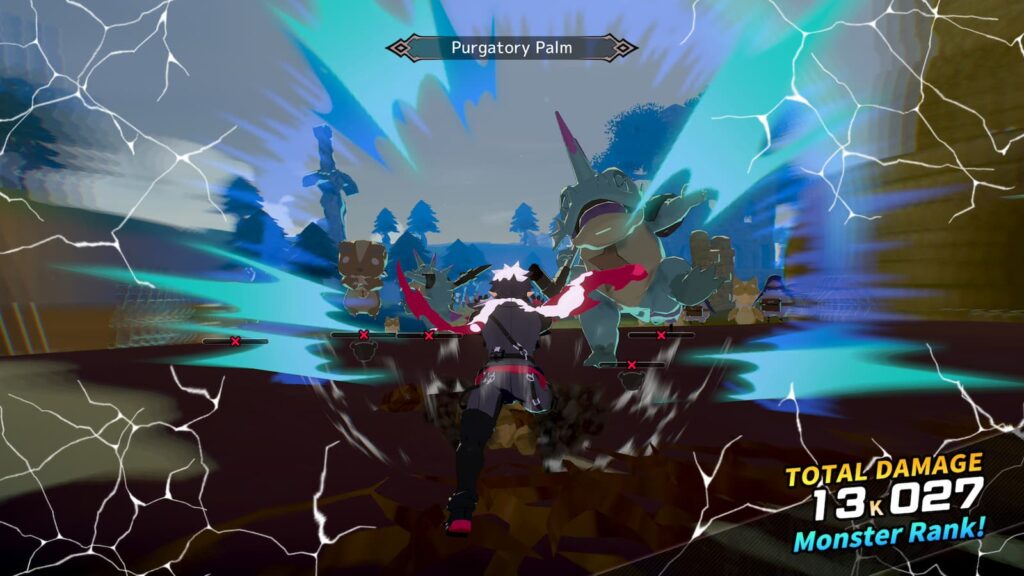
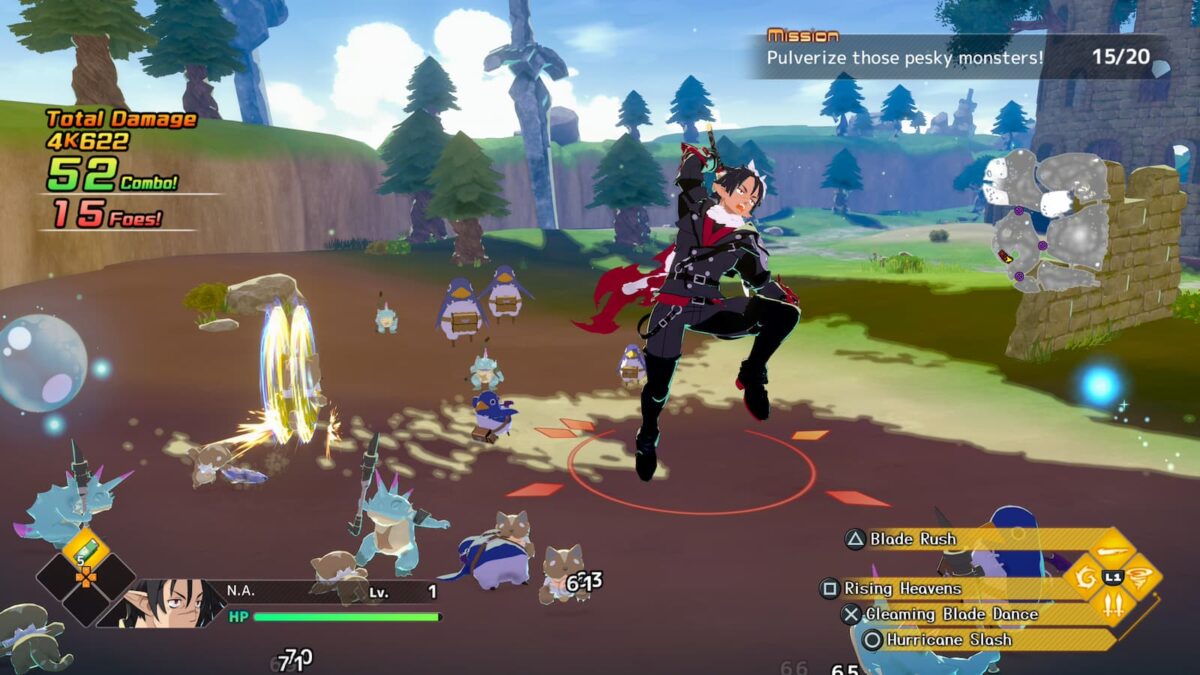
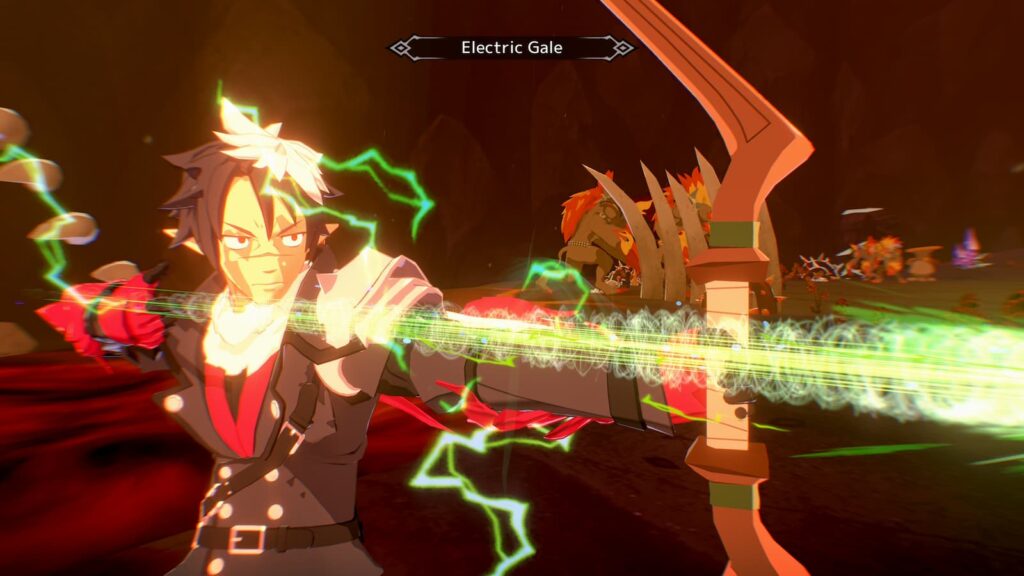
Normal attacks aren’t the only thing the player will have at their disposal, as each weapon will also have multiple special skills that you can activate at any time. While Disgaea Mayhem doesn’t feature a traditional Musou Attack or a corresponding meter, there is a skill system that allows the player to perform powerful attacks by pressing L1 in combination with one of the face buttons on their controller. This skill system is very similar to the ones found in Koei’s Pirate Warriors 4 and Marvelous’ Fate/Extella Link.
Attack skill systems like this can be very difficult to make feel satisfying, as they must walk a tightrope between being just normal attacks and giving the player access to four different super moves. The skills in this demo were incredibly varied, with short cooldown times and each weapon having one over-the-top super move, which took the form of a short cutscene (The one tied to the staff even included 2D sprites).
The cooldown times on each skill were comfortable enough that I was able to repeatedly use them during my time playing, yet they weren’t so short that they replaced attacking enemies with normal attacks. Overall, they struck a good balance and were a welcome part of the gameplay experience.
Next, I would like to speak about how stages are structured in Disgaea Mayhem. While I tested three different weapons for the demo, I also got to try them on three separate stages, which were sorted by difficulty. Despite this, I was unable to feel any tangible difference in the difficulty of the stages. I believe this may be a result of the equipment the PAX demo provided the player.
Each stage in Disgaea Mayhem will have the player run from Point A to Point B, following your minimap and fighting enemies as you encounter them. While most paths in the stages were cut off during the demo, the minimaps showed that each of them had intersecting pathways that will likely be used to spice up which direction the player will run through them in the main game.
As you go through the stage, several objectives will appear. During the demo, these were all simple tasks like “Defeat 20 enemies”. Or rather, all objectives in the demo were some variety of running to the next location and defeating a specific number of enemies. With a complete lack of bases to capture or NPCs to either defend or defeat, the stages in this demo all felt identical to one another, with only graphical differences between them.
While I love fighting enemies in this style of game, variety is the spice of life, and I hope that the actual game at least spices up the stated reason we are fighting these enemy hordes. Speaking of those enemies, another detail from the demo that worries me quite a bit is how all enemies in a stage vanish whenever the player completes an objective. One of the most fun aspects of this genre is seeing how hard your KO count can get as you make your way from one end of a stage to another.
Having all the enemies vanish when objectives are cleared ironically makes fighting them feel more like busywork than if they just stayed around. As the player no longer feels like they are making their way through a battlefield of foes, but rather having roadblocks appear in their way that they must take care of.
This style of stage design is much less like Koei’s Warriors franchise and could be more closely compared to Aquaplus’ Utawarumono Zan series. The player is not focused on conquering a battlefield and making it their own, but rather focusing on fighting enemies wherever they pop up, like the world’s most high-numbers game of whack-a-mole. I admit that this style of stage and objective design isn’t my cup of tea, but I will not dock any points for it as it can be satisfying at times.
To close things off, at the end of each of the three demo stages was a boss fight against a giant enemy. These were the only times I actually took damage during the demo, but that is to be expected when finally getting to fight something other than a peon. While I wouldn’t go as far as to describe these enemies as difficult, defeating them did lead to a satisfying ending for each stage.
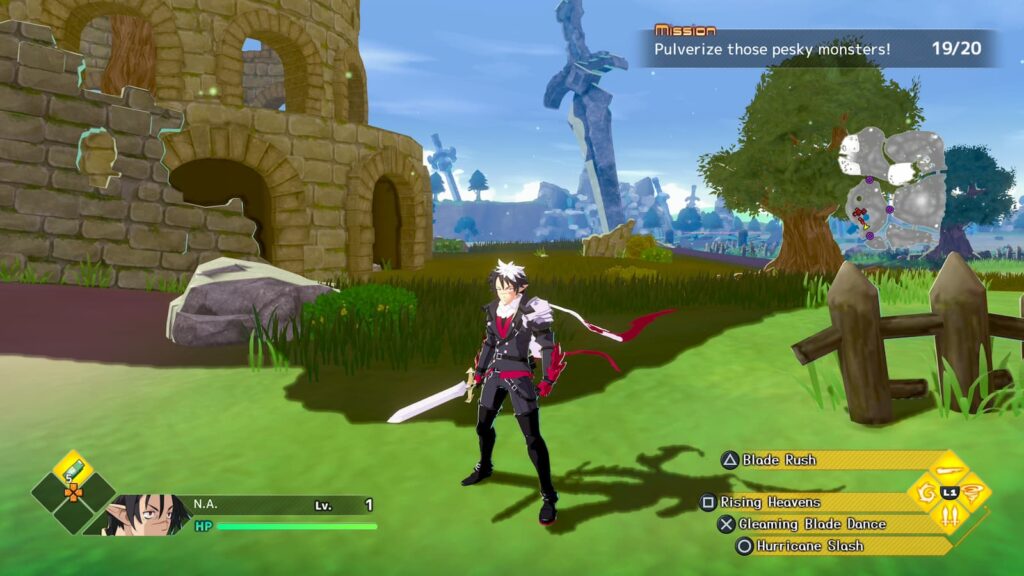
Graphically, I find the character models of Disgaea Mayhem to be very good. The art style of Disgaea is one that has proven to be very difficult to translate into 3D in the past, but the enemies and protagonist of Mayhem look great. I have less positive feelings toward the environments of the game, however, as they can look quite messy at times. The rock textures in the second stage, in particular, are very unpleasant to the eye.
Overall, I do believe that Disgaea Mayhem has potential to be a decent game in the Musou subgenre, with the developers having a good grasp on how to make movesets that are both interesting and unique. However, the demo at PAX East also displayed many issues which make this a hard game to be excited for as a fan of this style of game, such as its stage and objective design. I hope that my issues with this demo were either a result of it being structured differently from the main game or a result of the weapons I chose, but for now, we will have to wait until the full release to see if these issues remain.