
Want to see Raider King content first? Add us as a preferred source.
Base building is one of my favorite pastimes, so StarRupture was a no-brainer the moment I saw it in development. Once I got my hands on an early access review key, it quickly became clear this is exactly the kind of game I’ve been wanting more of.
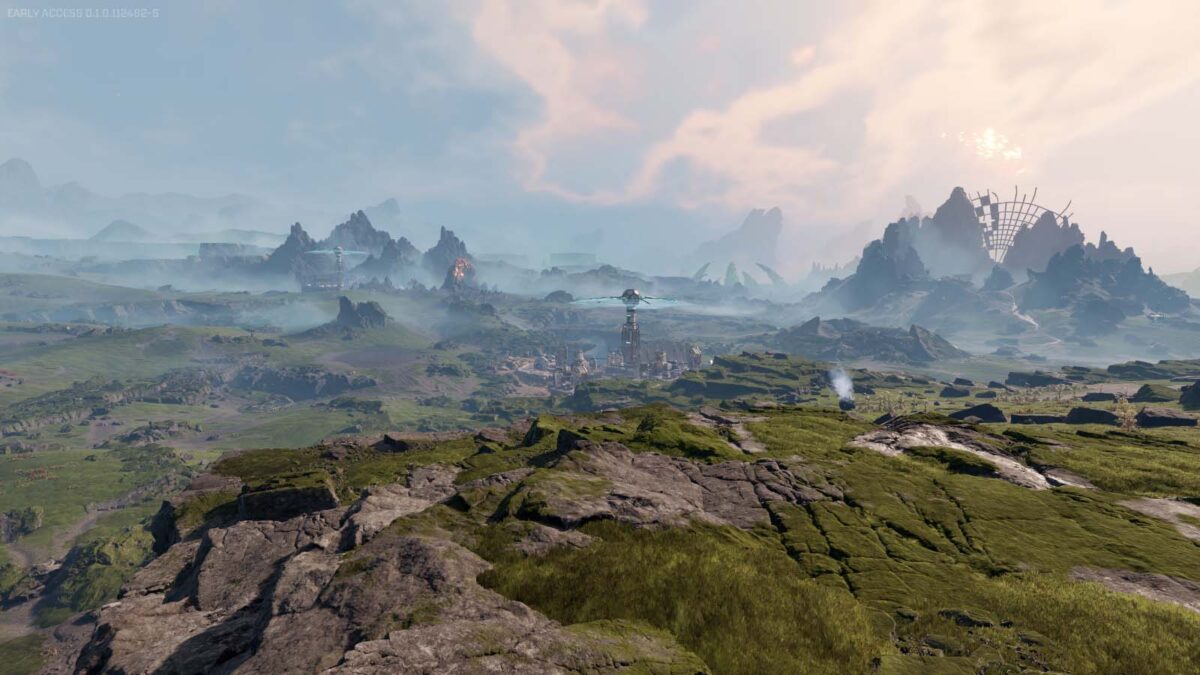
In StarRupture, you play as a criminal sent to the hostile planet Arcadia-7 to mine resources and ship almost everything back to the corporations funding the mission. You start from scratch, using a harvester laser to break down meteors, then gradually turn that scavenging hustle into a proper mining operation that can extract and process resources with minimal hands-on babysitting.
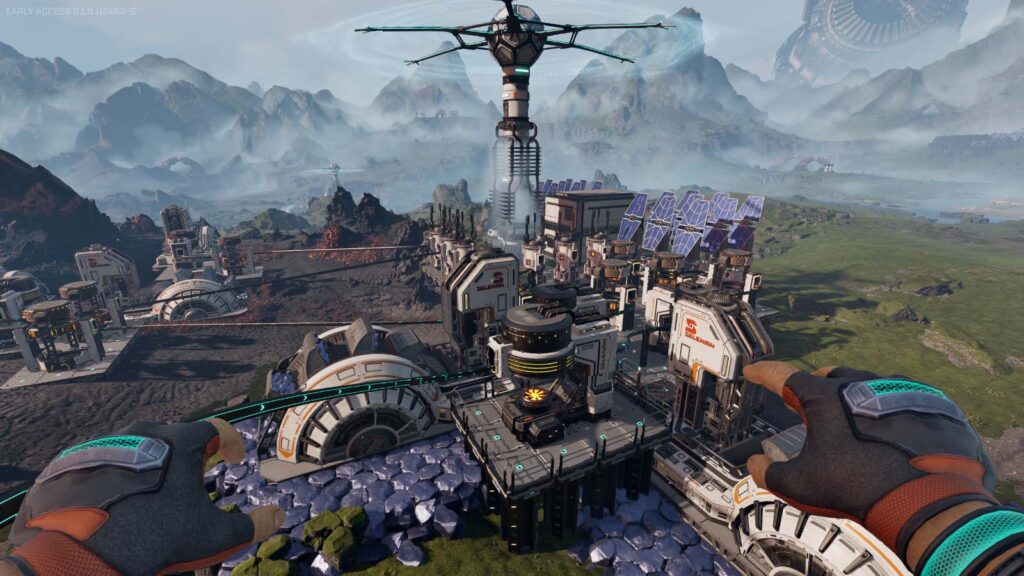
The base building can feel a bit finicky at first, mostly because early placement decisions can come back to haunt you once you’re trying to squeeze in new manufacturing structures. The good news is it’s easy to fix mistakes: you can remove buildings, adjust height, rotate things, and generally rework your layout without too much pain.
Base building is generally very smooth. I didn’t have much trouble getting things set up the way I wanted, and outside of a few small bugs that will likely be ironed out soon, the tools feel reliable and easy to work with. You can place structures at whatever height and angle you want, and there’s a lot of customization even early on, railings, shallow or steep stairs, platforms, and plenty of little layout tweaks that let you shape a base that feels like yours.
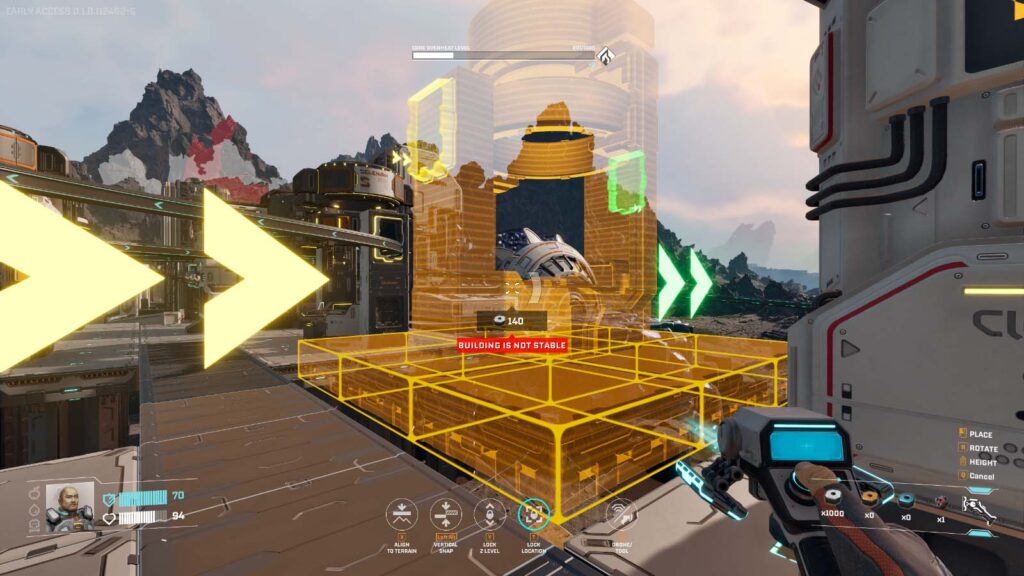
One of the more annoying parts, though, is the railing system, specifically the conveyor-style railings you use so you don’t have to manually move resources between stations. In theory it’s a great idea, but in practice you’ll often need to tear sections out as you expand your supply chain, and placing them cleanly can get weirdly fussy. They can’t intersect, and if you’re trying to route from point A to point B quickly (especially in a crowded base), it turns into a bit of a logic puzzle. More than once I ended up placing a support pole way lower than my platforms just so a rail could duck under another one I’d already laid down, partly because I didn’t want to rip up half the network just to redo one junction. That’s on me for being lazy, but it still ate more time than I’d like to admit.
Once your setup is stable, you’ll begin placing Cargo Launchers to send resources to one of the five corporations that “sponsored” your forced vacation. Those corporations are basically your research tree. You send them materials. When they’re satisfied with the amount delivered, they level up and reward you with new structures, mechanics, and upgrades like more inventory space. If you want to progress, you need to keep meeting their demands, and those demands escalate fast.
At the start, sponsors ask for basic raw resources. Before long, you’ll be routing materials through a Smelter for refined versions, and a few hours in, requests can get so complex you’ll need a chain of several structures just to produce one deliverable. It’s a satisfying “factory brain” spiral… but importantly, the game doesn’t lock you into only progressing through pure production.
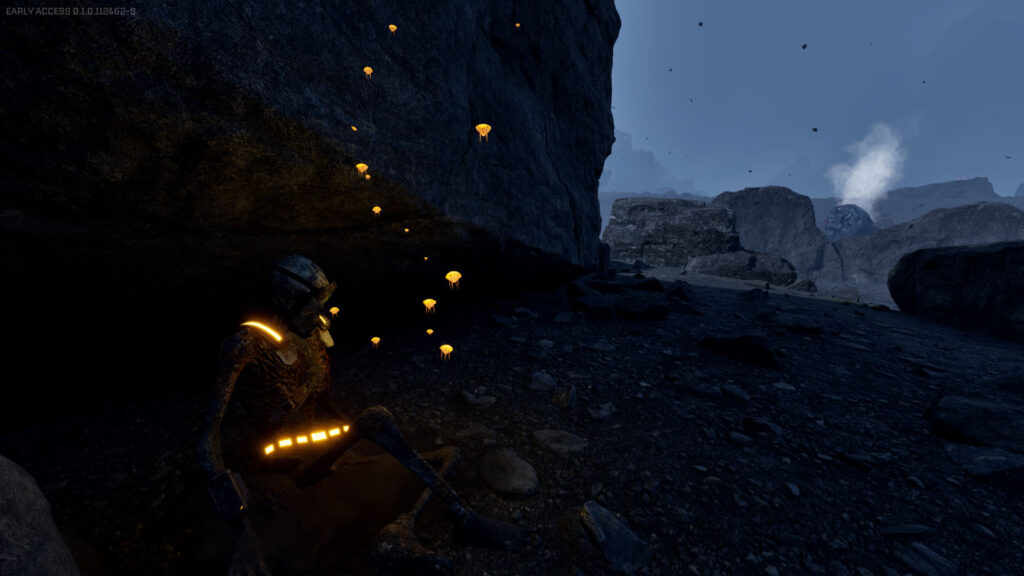
You can also level the corporations by paying them with Data Points, which you earn by analyzing discoveries out in the world: fauna, artifacts, remnants of old mining colonies, and more. It’s a smart pressure valve: if you’re not in the mood to bolt yet another production line onto your already spaghetti-ing base, you can go explore, cash in Data Points, and keep moving forward at your own pace. Or you can mix both approaches, depending on what you feel like doing that session.
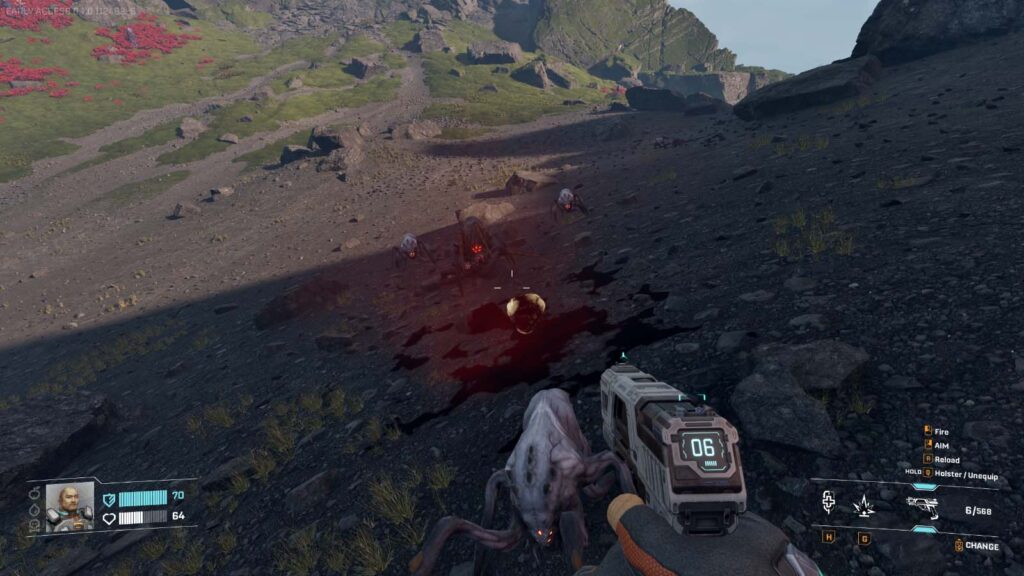
That flexibility feeds into what ended up being the most interesting part for me: exploration. Arcadia-7 is huge and packed with things to find, including abandoned bases that tend to be crawling with one of the most annoying enemy types developers have ever successfully engineered: giant insects. They don’t sound terrifying on paper, but they have a nasty little toolkit: slashing attacks, explosive enemies that strip your shields, and ranged poison “goo” that makes wandering around feel constantly contested.
Individually, they aren’t that scary. The problem is that they’re insects, so they rarely show up in polite, manageable numbers. As you move across the planet, you’ll regularly get swarmed, and it’s not just a you problem, they can attack your base, too. The further you push away from the landing zone, the more intense it gets, and that naturally turns your expansion into a bit of a base-defense story as well.
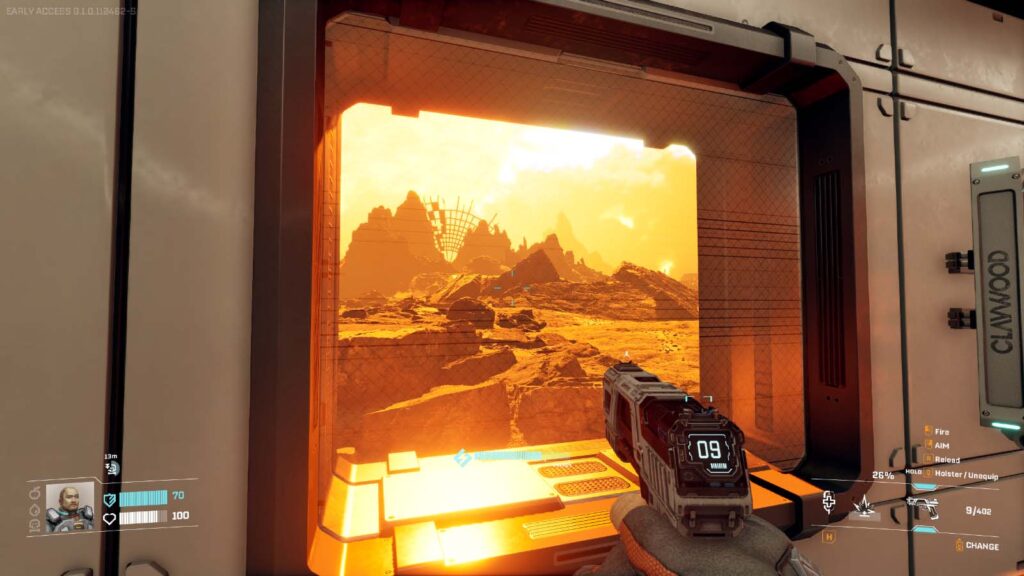
Exploration also ties into the game’s signature threat: the rupture. Duh, it’s in the title. Every so often, the star hanging over Arcadia-7 ruptures and essentially burns the planet to a crisp, instantly killing you unless you’re safely inside your base. It’s a great mechanic because it’s both thematic and practical: it forces you to think like a real colonist, always aware of distance, timing, and where your nearest shelter is. It also nudges you into building more than one base as you reach for new resource zones, because stretching too far from safety is eventually fatal.
After a rupture, the planet turns into a giant, ash-choked playground to explore, and it honestly feels incredible. Under normal conditions the landscape is bursting with those vibrant alien colors modern games love, but post-rupture it’s all grey and ruined, like someone hit the world with a reset button and forgot to put the saturation back. Farming spots for water plants and food get scorched, leaving you surrounded by smoke, debris, and strange burning rocks that double as a unique resource you can mine right after the rupture.
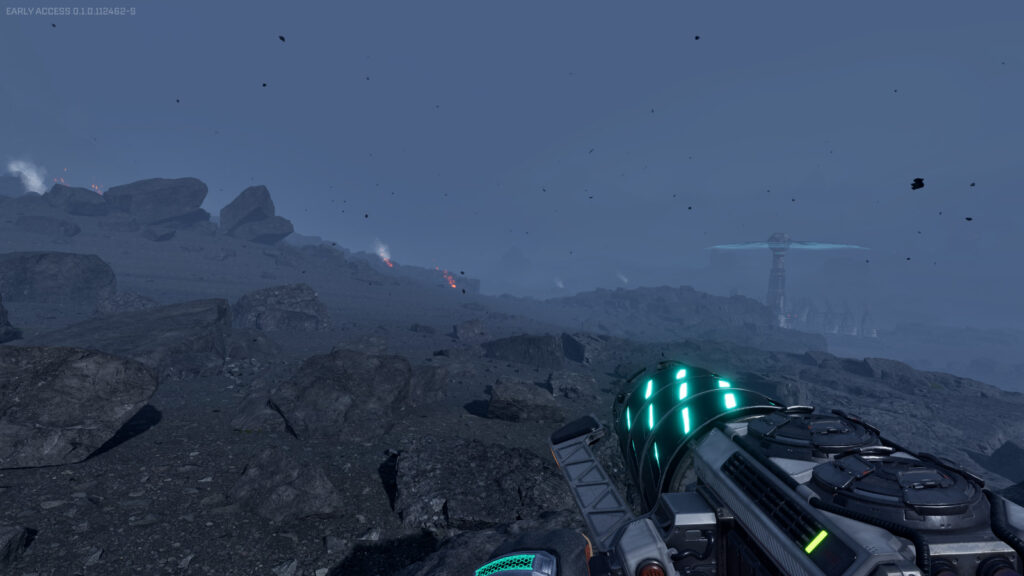
It also adds a great rhythm to exploration: the best time to go on a long trek is usually immediately after everything burns, because there are no enemies unless you trigger them, and you’ve got a clean window before the next rupture cycle. When the planet finally stabilizes, you’ll get a notification, and that’s your cue that plants are back, and insects are about to start crawling up from the ground again.
Later on, you can lean further into the “colonize and hold territory” fantasy, especially once you get cozy with the military-focused corporation and unlock turrets. At that point, the loop shifts a bit: you’re not just surviving the planet, you’re pushing into it, establishing safe zones, and daring the bugs to try their luck.
There’s also a light survival layer, because what’s an alien base-building game without hunger and thirst? StarRupture does make you eat and drink, but it’s fairly easy to stay on top of since the planet is packed with fruit that refills those needs in abundance. The one wrinkle is toxicity: some plants can raise your Toxic levels, and if you push it too far, it can kill you. That said, there are so many safe food options that do the job without side effects that the toxicity mechanic feels a little underused right now, more like a warning label than a real survival pressure.
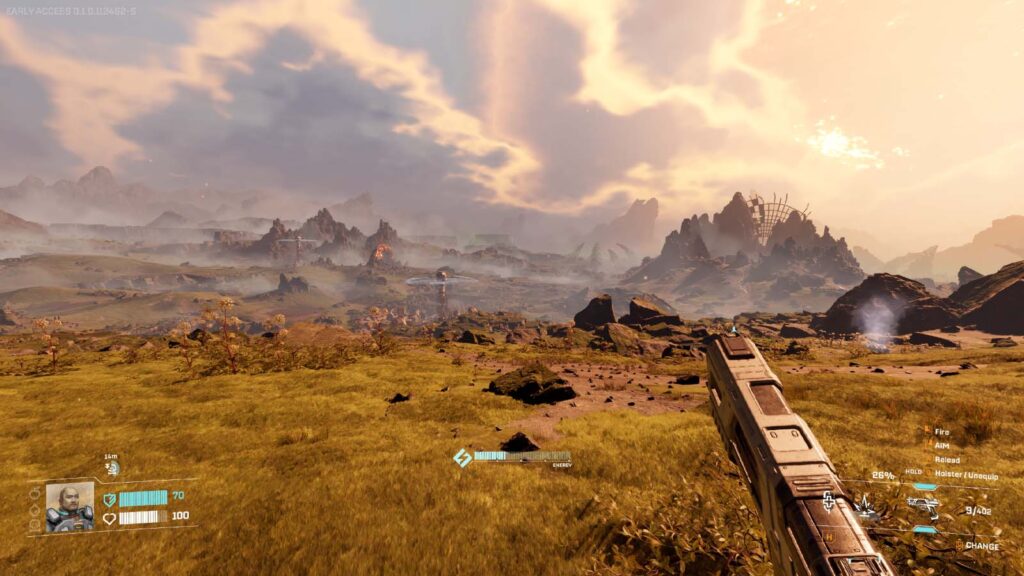
If there’s one consistent friction point, it’s that progression can feel a little quick in a way that increases pressure on solo players. Early on, a single well-planned base can keep your sponsors happy, but each new level asks for new outputs, and many of those eventually require exploration. And exploration, particularly raiding old colonies, can be brutal solo even when you’re rocking the best currently available weapons.
Because of that, StarRupture sometimes feels like it was designed with co-op in mind, where players can split responsibilities: one person refining the factory lines, another scouting and scanning for Data Points, someone else handling combat and hauling. In single-player, you can absolutely do it, and it’s still really fun, but it can get overwhelming when you’re juggling base optimization, production chains, combat readiness, inventory management, and long-range trips that can go sideways fast. Plenty of my “oh come on” moments happened when I ventured too far from safety and tried to “conquer” the map for no good reason… which, to be fair, might be a skill issue on my end.
Like most survival games, death isn’t the end, it’s more of an inconvenience. When you die, your inventory stays where it dropped, and you respawn either at the original landing craft or at respawn points you can build at your bases. That’s helpful, but it also means recovery runs can be a real chore if you faceplanted into a hundred insects far from home.
On the technical side, my experience was strong: great performance, no stuttering, and no lag spikes. I only ran into one or two bugs (which doesn’t feel shocking for early access), and I didn’t have any crashes. For reference, I played on an RTX 5080 with an Intel Core Ultra 9 285K.
If you love base building with some action layered on top, StarRupture is easy to get excited about. And if any part of the loop doesn’t immediately scream “buy,” it’s also the kind of game that’s likely to shine even brighter with a friend, because everything from bug-swarm firefights to managing multiple outposts feels like it was made to be shared. Either way, I had a great time with it, and I’m looking forward to seeing it properly released so I can drag my friends along and help “conquer” this insect-ridden planet together.
StarRupture Early Access
Bottom Line
StarRupture is a strong early access mix of flexible, satisfying base building and automation with high-stakes exploration that’s shaped by the rupture cycle, creating a great “plan, build, push outward” rhythm. Solo it can feel a bit overwhelming once progression pressures you into tougher expeditions, but when it clicks it’s the kind of game that’s hard to put down, especially if you can bring a co-op partner.


