Want to see Raider King content first? Add us as a preferred source.
On May 21, 2026, IkinaGames released their turn-based RPG Starbites to the world. This title sees players take control of a mech pilot named Lukida as she scavenges through the desert with her friends in search of fortune. Is this game worth players’ time, or should they instead save up and evacuate the planet? Let’s dissect the game piece by piece and make the decision for ourselves.
Engaging Element-Based Combat
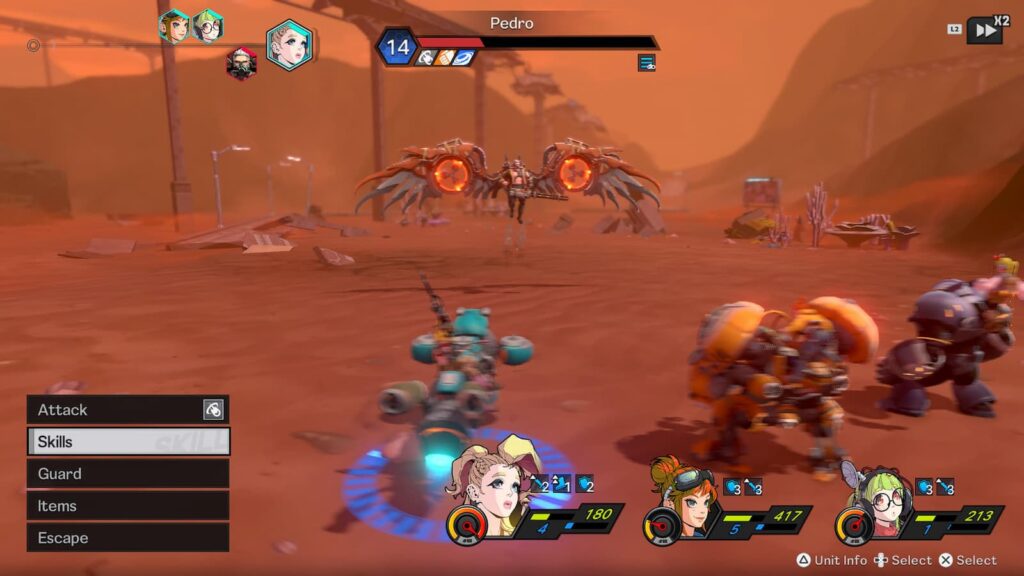
Starbites’ gameplay takes the form of a turn-based RPG. During combat, your party of three characters and enemies will take turns attacking each other, with turn order being based on a character’s speed stat.
Every attack action in Starbites has an element attached to it (some attacks even have multiple elements) as well as a hit count.
Attacking enemies with an element that they are weak to will decrease their break gauge. Once this gauge has been completely decreased, the enemy shall be stunned for a turn. Actions that hit enemies multiple times will naturally decrease this gauge multiple times as well.
This creates a system where the player will continuously be focusing on enemies that they are sure they can break this turn in order to stunlock them and avoid taking unnecessary damage.
Despite being an elemental attack-based system centered around breaking enemies, each party member does get to serve their own roles in combat outside of the types of elemental attacks they learn.
For example, Gwendoll has a low defense stat, but a high attack stat in addition to skills that raise her attack for several turns and skills that raise her speed. This makes her a perfect glass cannon character and the complete opposite of someone like Badger, who has high defense and skills to make enemies target him so he can serve as a tank unit.
These combat roles help Starbites’ combat system feel dynamic and avoid the potential monotony that can often come with elemental-break-based systems. I only wish that the game were wise enough to avoid monotony in other aspects of its design.
Endless Repetition
By far the largest issue with playing through Starbites is the game’s repetition. Due to how the game’s world is structured, with there being a central town with multiple exits into different sections of the desert, the player will continuously need to travel through areas they have already explored.
The number of times the player will need to walk through the exact same areas of the desert and fight the exact same enemy types before the plot finally progresses can feel agonizing. One can only visit the same bandit camp in the bottom right of the map so many times before they grow sick of it.
Even fast travel cannot help this issue, as the player can only teleport to towns; there is no avoiding these treks through the desert even after you have reached the point of being able to kill all enemies in the area in a single attack.
I’m typically someone who likes to do every sidequest I see when playing through a JRPG, but that was a struggle here. When the main plot of the game already involves revisiting areas multiple times, having additional quests that involve the exact same thing was almost unbearable.
Battle Issues
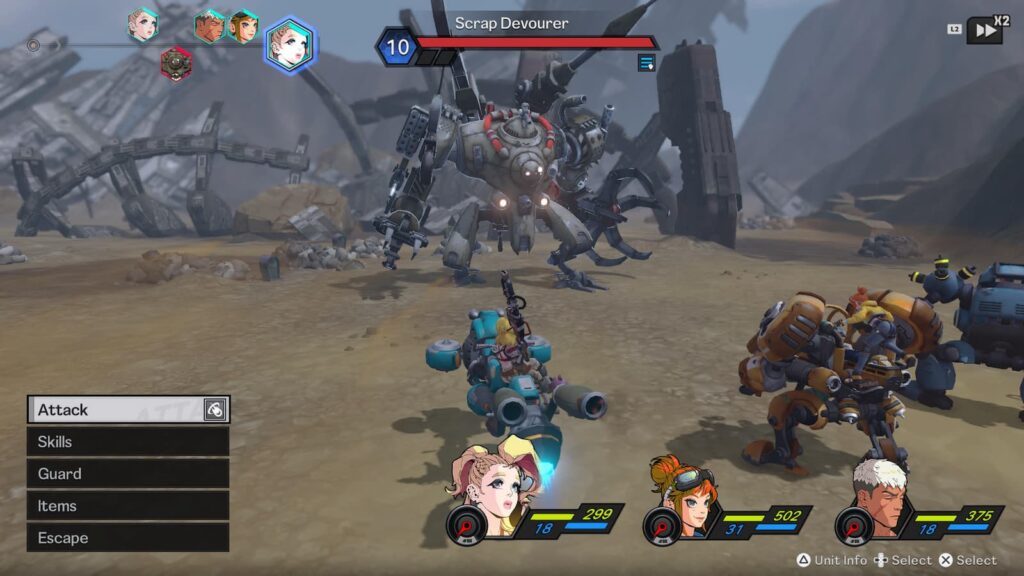
Going through the same areas repeatedly, of course, made some issues with the game’s battle system stand out more than they would have if I were entirely engaged. One thing that stood out was just how easy the game was.
Starbites, despite having many ways for the player to buff and defend themselves, rarely asks more of the player than attacking enemies with the right attacks.
The first two-thirds of this game are very easy, with next to no enemies or bosses posing a real challenge to the player. While the game turns this around in the last third with some actually challenging fights, it’s still an issue for a large portion of the game.
Another issue I had with the game is how the game will occasionally glitch out and make the player unable to activate the Driver’s High mechanic, despite a character’s meter being fully charged and being prompted to activate it.
During the late game, I lost multiple boss battles, not due to any mistakes of my own but because the game simply decided I couldn’t activate a character’s Driver’s High super move state for multiple turns in a row.
A Graphical Mess
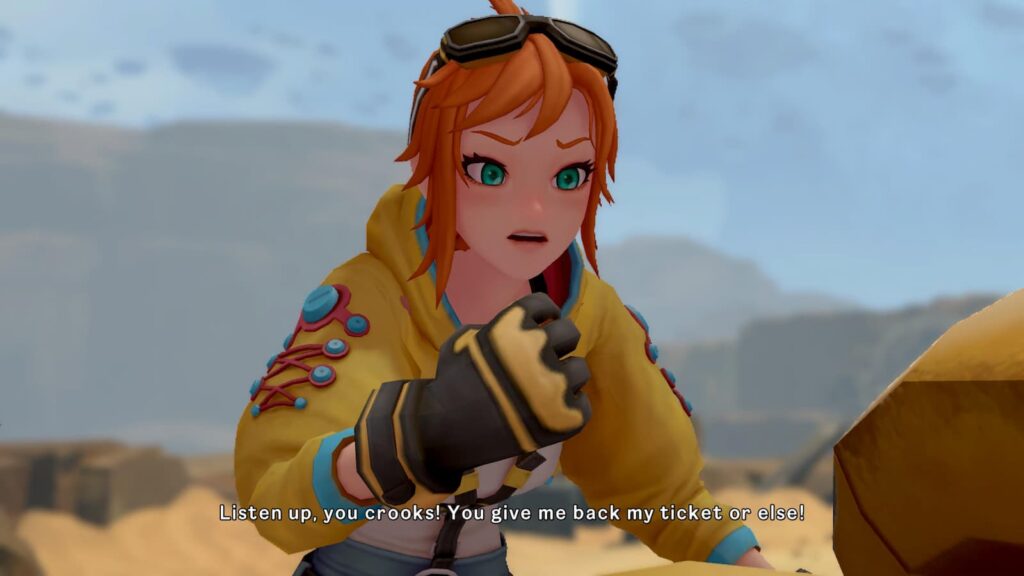
Unfortunately, Starbites is a game that just does not look good graphically. Character models in this game look quite bad and don’t even do a good job at showcasing the game’s art style.
This extends to the game’s locations as well. Most outdoor and indoor areas blend together with very little to make them stand out. While this could be argued to be intentional, as it’s all a desert, I feel like it’s more of a consequence of the game’s models just not being up to snuff.
While these graphical shortcomings are mostly ignorable during combat as you’ll be viewing the models from behind at a distance, any time the game transitions into a cutscene, the flaws of this visual style are on full display.
Closing Thoughts
Overall, I did not have a very good time playing through Starbites. Despite the game featuring a decent battle system, the pure tedium of the experience, combined with a lack of challenge, just made this game hard to sit through. When so many other great JRPGs are releasing this year, it would be very hard to recommend Starbites to someone.
Starbites
Bottom Line
Starbites is a game whose battle system had a lot of potential, but is sadly held back by a repetitive structure which sees the player traversing the same areas and performing the same actions repeatedly. It is very hard to recommend this title to JRPG fans