
Want to see Raider King content first? Add us as a preferred source.
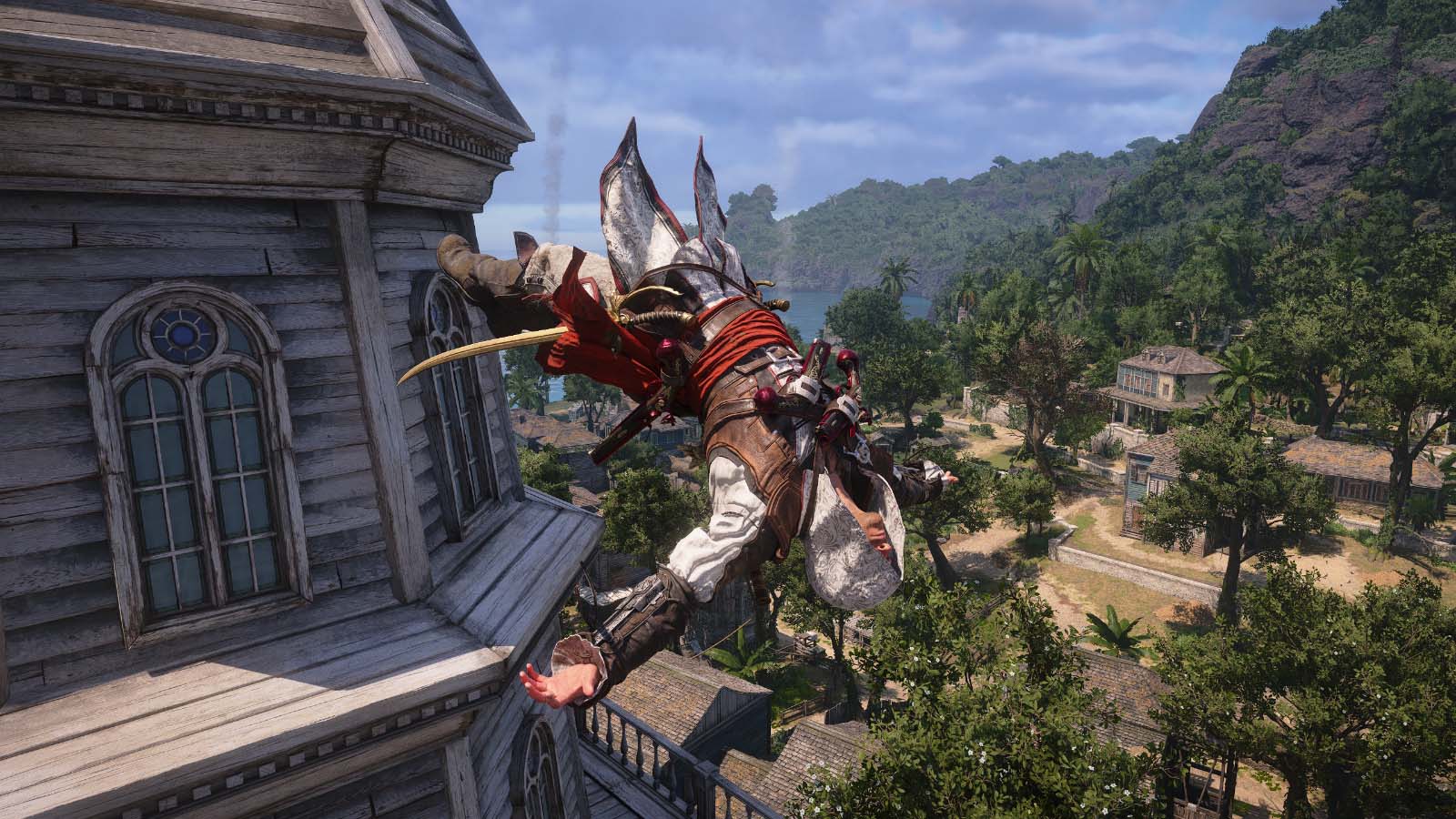
In anticipation of the release of Assassin’s Creed: Shadows, I binged every game in the franchise during the summer of 2023. I greatly enjoyed my time with the games, but as I got to the later half of the franchise, something began to stick out like a sore thumb: The modern Assassin’s Creed games have a serious story structure problem that can be neatly summed up with how its villains have been treated.
In what can now be referred to as the classic era of the franchise (Assassin’s Creed 1 to Assassin’s Creed Rogue), the games were deceptively linear. They had open worlds, but the mission structure of the game was more akin to something like Grand Theft Auto than Skyrim, with the story missions appearing one at a time.
This linear story structure was always fantastic, with each game featuring multiple arcs within its story which often ended with the assassination of one of the franchise’s many antagonists: the Templar. Each Templar would be neatly introduced, have various interactions with both the protagonist and others in the world, and then have a grandly designed mission about taking them down.
The games still had side content in their open worlds, but it never truly interfered with the main plots of each title. They were just bonus activities and collectibles which gamers who wanted more bang for their buck could enjoy.
It was a simple structure, but one that made Assassin’s Creed a household name for years. While it was natural that the game developers would want to experiment with this structure eventually, the results have been very mixed.

Starting with Syndicate, the franchise began to take a more non-linear approach to its story missions. It started subtly here, with the game giving the player two or three options at a time for which mission they wanted to do. The story structure wasn’t too affected as the player had only a few plot lines to focus on at any given time.
The plot focus in Syndicate still felt centered around the personal character journeys of the protagonists and taking down the various Templar, while the amount of side content in the titles was increasing there was still a nice barrier between it and the main plot.
That all changed with the release of Origins, which fully embraced the franchise’s open-world design and gave the player a full list of templars to hunt down almost immediately after the prologue, with the promise that you could hunt them down in any order you wish.
The main story quests icon no longer looked different from sidequests, there were still distinguishing factors like cutscenes, it was clear that a change was beginning to happen to the franchise’s quest methodology with this title.
While the game still retained some structure via the various Templars being a higher difficulty level than the others, it still felt like some of the structure was lost as the story will no longer focus on a single threat due to the player being able to ditch these missions and wander off to another section of the world at any given time.
Still, the cutscene design of Origins did wonders to make even this new mission structure work. The player could easily be sucked into the story of each individual Templar via Bayek’s performance and anger toward each of them. The next two games in the franchise, however, did not have this advantage.
Assassin’s Creed: Odyssey increased the scope of the franchise tenfold with the largest open world the series has seen to date and a gigantic mission list that gave the player 50 different Templars to hunt down! With that many enemies to face, it should come as no shock that next to none of them had a role in the plot.
Even the leaders of Odyssey’s Templar organization don’t leave much of an impact, due to the game’s incredibly non-linear structure, most of them get a single cutscene at most to establish themselves before immediately getting killed by the player. None of the joy of previous franchise antagonists remains in the way Odyssey’s villains are written.
Taking down the Templar, one of the main story quests of the game doesn’t feel any more grandiose of an action than slaying five guards for a sidequest. Without the satisfaction of taking down a villain or meaningful plot progression, it feels like the only benefit from continuing the main plot is to cross an item off one of the game’s many checklists.
And that may be intentional. Assassin’s Creed: Odyssey positions itself as a never-ending game that is all about the side content and how the player should be spending hundreds of hours doing random quests. What was once a series of linear action-filled missions with optional side content has now become indistinguishable from games like The Elder Scrolls.

While Assassin’s Creed: Valhalla wisely chose to shrink down the scale of both the game’s world and the number of tasks the player had to do, the game’s Templars have the same issue as Odyssey’s, with none of them having an impact due to the sheer amount of them and how the game’s plot is written with the expectation that the player can hunt them down in any order.
Similar to Odyssey, Valhalla strived to be a never-ending game that the player should sink all their time into. Each area of the game had a literal checklist of content to complete which would appear at the top of the screen and the game wouldn’t even receive a proper ending until after various post-release patches.
Thankfully, Assassin’s Creed: Shadows scales down the scope of the franchise even more, bringing the size of the game back down to what it was in Origins, the number of Templars to hunt down has also been decreased to the same amount as in Origins.
While this is a welcome change and the early game of Shadows certainly begins strong, after the assassination of Oda Nobunaga the game’s structure begins to landslide.
While antagonists like Mitsuhide are interesting and welcome, they completely vanish for most of the game’s runtime as the player is required to take down a checklist of other Templar before they can actually continue the plot.
The mission structure of modern Assassin’s Creed just isn’t capable of supporting the same style of antagonists and character arcs as previous games in the franchise, however, there is some hope for the franchise as Shadows’ ‘Checklist Templar’ is an improvement over what we saw in Odyessy and Valhalla.
While most of the Templars the player must kill in Shadows still only get a single cutscene at most to shine, there are some like Lady Oichi who get to appear in multiple missions across several hours of the game. Oichi gets a full character arc during her sections of the game and I truly wish the other Templar got the same treatment.

One has to question what the games even stand to benefit from abandoning the old linear story structure for this new one, wouldn’t it make more sense for an RPG with a leveling system to be linear? Not only do the antagonists get less time to shine in a non-structured story but the overarching plot of the game also grinds to a complete halt in all of the modern Assassin’s Creed games.
The answer is likely due to how Ubisoft wishes to market and sell the games. By putting the side content and the main story of each title on equal footing, players will think every aspect of the game has equal worth. They want the franchise to be known as a collection of million-hour adventures when that simply doesn’t fit the structure of classic Assassin’s Creed, the franchise gamers fell in love with in the first place.
While I do not like to suggest that problems like this can have simple solutions, I do believe that the RPG era of Assassin’s Creed would strongly benefit from looking back at past games like Rogue and Black Flag when deciding on how the game should be structured.
Or if Ubisoft is set in their ways of keeping the current very nonlinear structure of the franchise, then maybe they should look to another successful RPG series for inspiration. As there is a game that handles its plotlines in a similar fashion to Assassin’s Creed: Shadows but executes it in a much better fashion: Square Enix’s Octopath Traveler 2.
Like the Modern Assassin’s Creed games, Octopath Traveler 2 features multiple different plot lines which the player can theoretically do in any order they please, with the only thing limiting their progression being the difficulty level of each plot point. What makes it better than the modern Assassin’s Creed structure however is that each of these plotlines spans the entire game, giving each of them room to breathe, develop characters, and set up antagonists.

If modern Assassin’s Creed handled its various Templar plotlines the same way, having each other span the entire game in a chain of quests which gave the audience ample time to become invested in fighting them before taking them down one by one near the climax then perhaps the franchise could have its cake and eat it too in regards to the current structure.
In several ways, the first act of Shadows would have been great for a structure like that as each of the game’s Templars is introduced at once before they each go their separate ways for the players to take down in the checklist format. After seeing them all be introduced in a grand fashion, it’s just a shame they didn’t get a chance to be actual characters.
I am still greatly enjoying my time with Assassin’s Creed: Shadows and love that the scale is equal to what was seen in Origins instead of Odyssey, but I cannot help but wish that the game felt more like Rogue whenever I get around to doing a main story quest. While the future of this franchise is uncertain, I hope that the RPG era of the franchise learns from its current flaws and grows from them.